
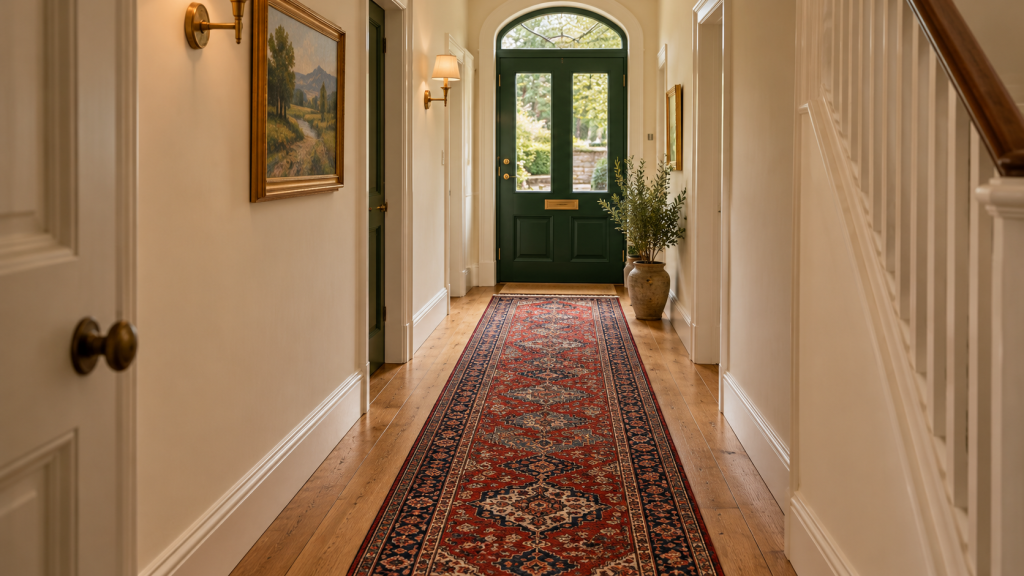
How to Choose a Persian Runner for a Narrow Hallway
A narrow hallway can be difficult to furnish. There may be no room for a console table, and even a small chair can interrupt the passage. A runner introduces colour and pattern without adding…
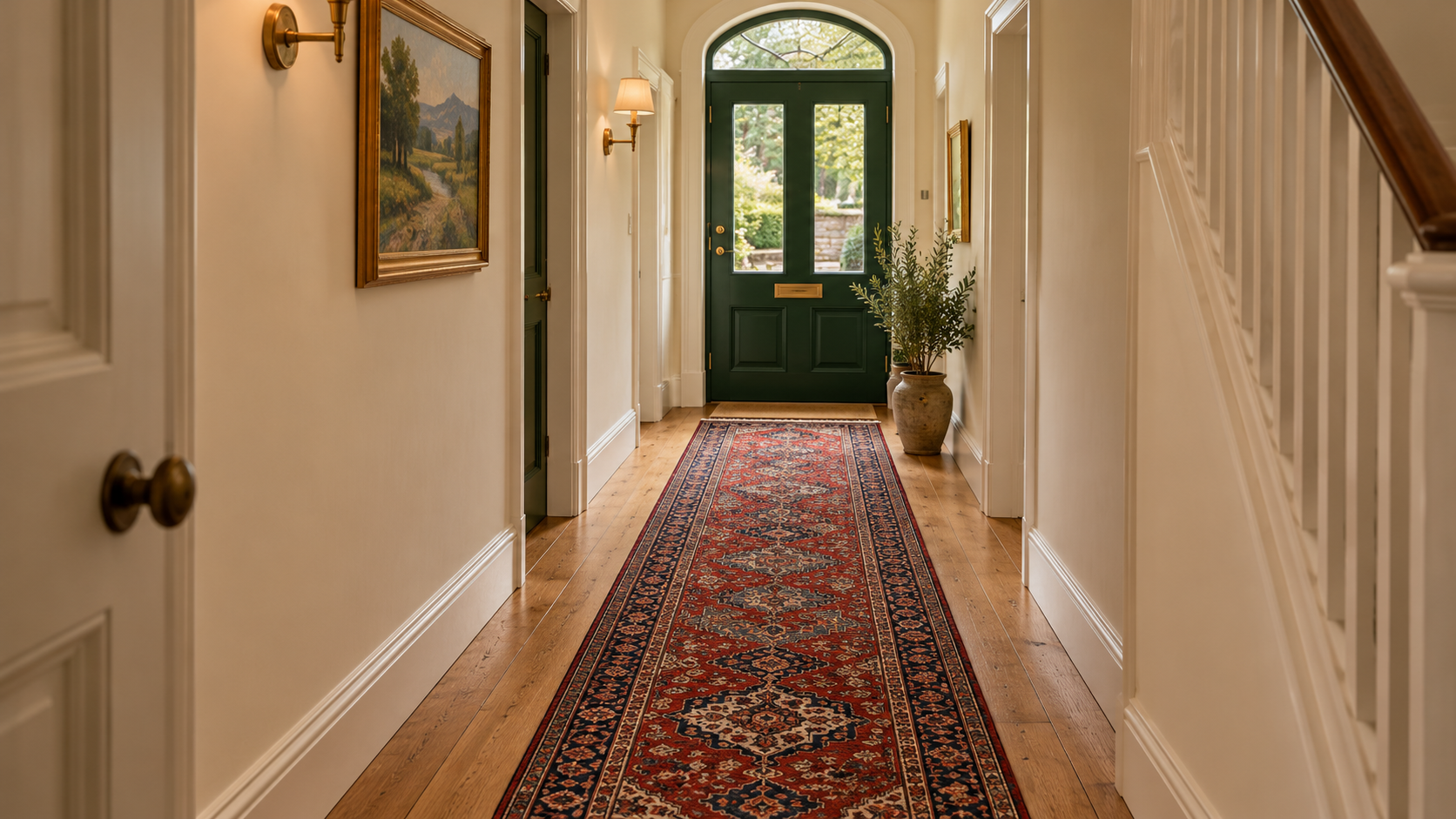
A narrow hallway can be difficult to furnish. There may be no room for a console table, and even a small chair can interrupt the passage.
A runner introduces colour and pattern without adding furniture. Getting the size right is the important part: it should fit the usable floor area comfortably and allow doors to open freely.
Measure the narrowest part first
Measure between skirting boards, then check anywhere the passage becomes tighter. Radiator pipes, door frames and fitted cupboards can reduce the usable width.
Next, measure the uninterrupted length where the runner will sit. Include any doorway where its position could affect a threshold.
A useful calculation is:
Hallway width − runner width = flooring left visible on both sides.
Divide that figure by two for a centred runner. For example, a 70cm runner in a 100cm passage leaves approximately 15cm on either side. This is an illustration, rather than a fixed rule for every hall.
Compare actual runner widths
A difference of ten centimetres can matter considerably in a narrow passage.
Featured piece: Sarogh runner, 203 × 70cm
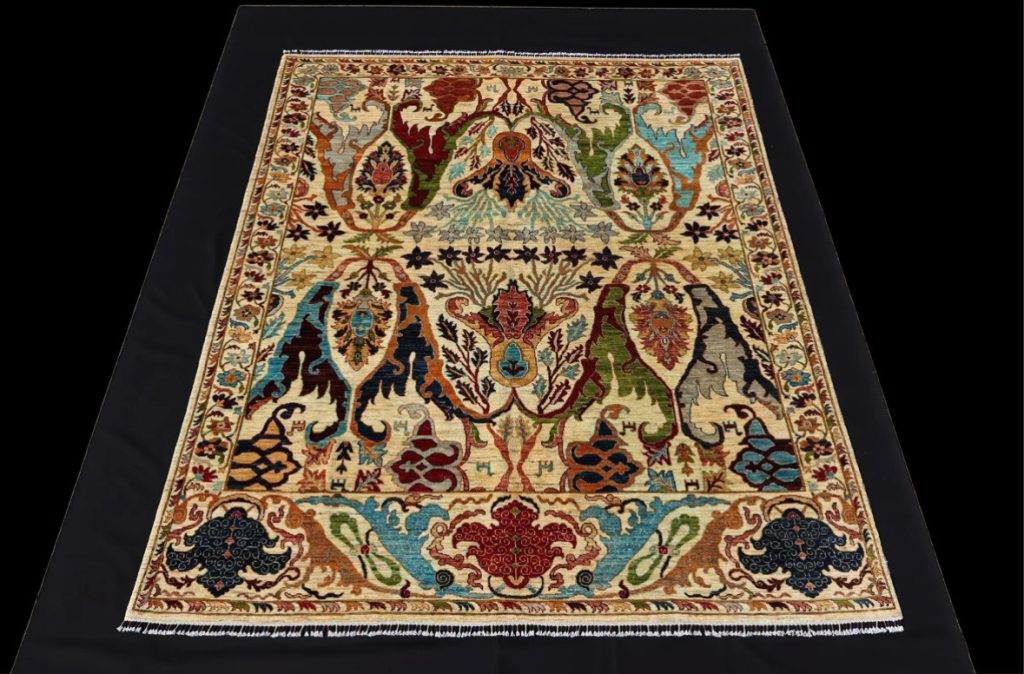
The 203 × 70cm Sarogh Persian runner is a useful starting point for a shorter, narrower space.
The listing describes a virgin-wool pile, cotton foundation and pink-and-blue colouring. At just over two metres long, it offers a different footprint from runners intended for a long corridor.
Check whether the quoted length includes the fringe before marking its position.
Choose length around the route through the house
A runner does not need to stretch from wall to wall or cover every centimetre of the passage.
Leave a deliberate area of flooring at each end. Where the hallway opens into another room or turns a corner, use that change in layout to guide its position.
For a longer passage, compare longer runners rather than assuming several shorter rugs will create the same effect. Multiple rugs introduce more edges and require careful positioning.
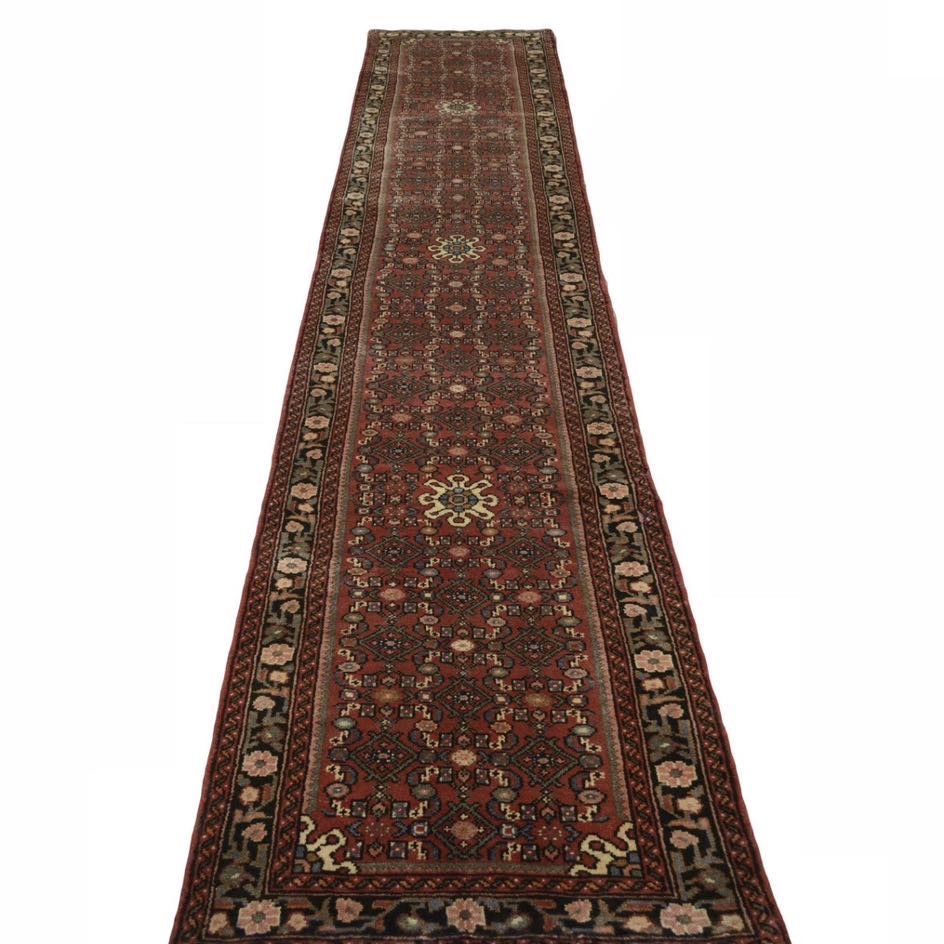
Featured piece: Hamedan runner, 390 × 71cm
The 390 × 71cm Hamedan Persian runner provides substantially more length while remaining close in width to the Sarogh.
It is listed with a virgin-wool pile, cotton foundation and red-and-beige colouring. Its long, narrow proportions make it worth comparing against the measurements of an extended hallway.
Check doors, pile and underlay together
Open every nearby door across the proposed rug position.
The clearance needs to accommodate the runner and its underlay together. Do not rely on a thickness figure alone: door position and floor levels also affect the result.
Choose underlay appropriate to both the rug and the floor finish. Ask for advice rather than adding an unsuitable adhesive backing.
If a door catches, reconsider the position or rug. A runner should not have to be forced into an awkward fit.
Choose colours that connect adjoining rooms
The hallway is often seen alongside a sitting room, kitchen or staircase. Consider those views together.
Pink and blue can provide a softer link to pale walls and neutral furnishings. Red and beige can add warmth alongside timber or stone.
Pattern can give an otherwise plain passage a focal point. Leave enough visible floor around the runner for its border to be appreciated.
Do not confuse style with origin
Some runners in a wider oriental-rug collection are made outside Iran. Their origin should remain clear even where a design name is familiar.
For example, the 288 × 81cm Kazak runner is listed as Afghan-made, with a virgin-wool pile. It is an alternative to compare if an 81cm width fits your space.
Check condition where feet will fall
Ask for clear images of the centre, edges, ends and fringe. Look for wear or repairs along the likely walking route.
An older runner may suit a quieter upstairs passage better than an entrance receiving wet shoes and grit. Keep the intended position in mind when discussing condition.
Find the runner that fits your hallway
Take width, length and door-clearance measurements before browsing. The shortlist becomes much easier when you know the dimensions your hallway can accommodate.
Compare the Sarogh runner and Hamedan runner, or contact Mayo Antiques with your hallway measurements.
Selected from the collection
Persian Rugs
Why Mayo Antiques
Collected with knowledge. Chosen with confidence.
Discover characterful pieces with clear information and personal guidance from our Castlebar showroom.