
Curated Timepieces

Watches

Collectable timepieces selected for condition, design and character.

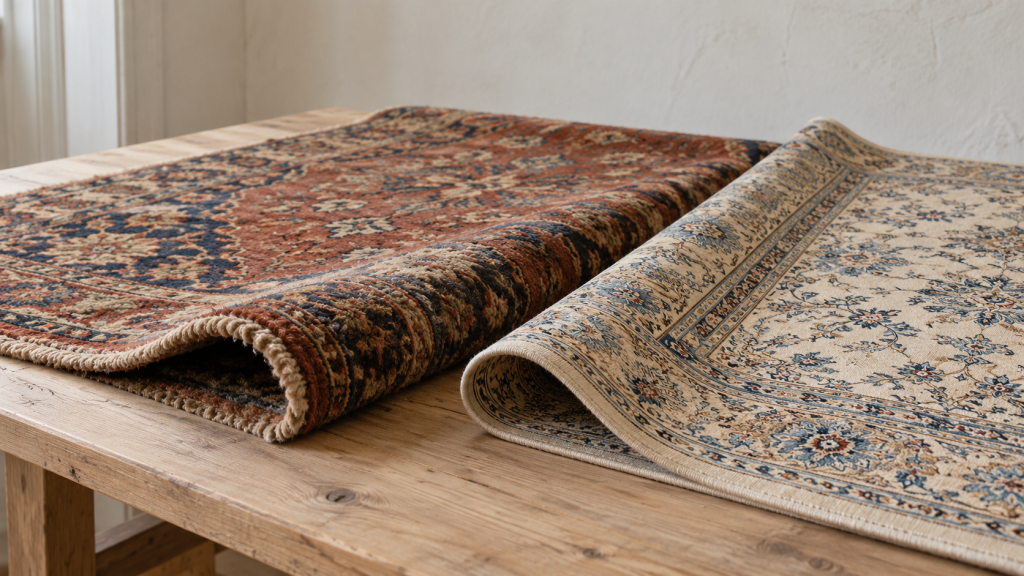
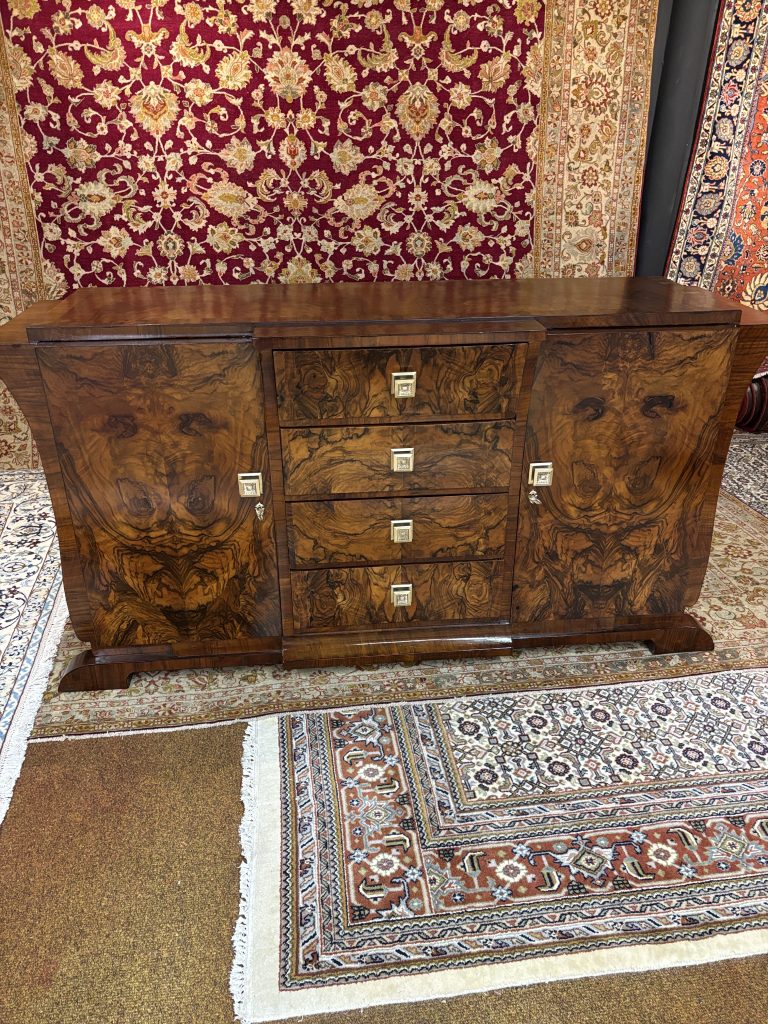
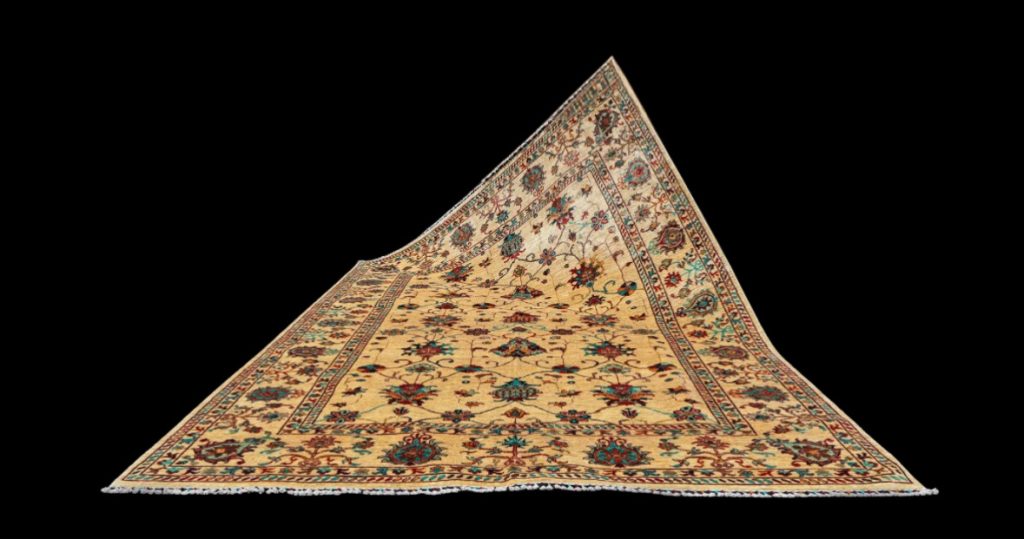
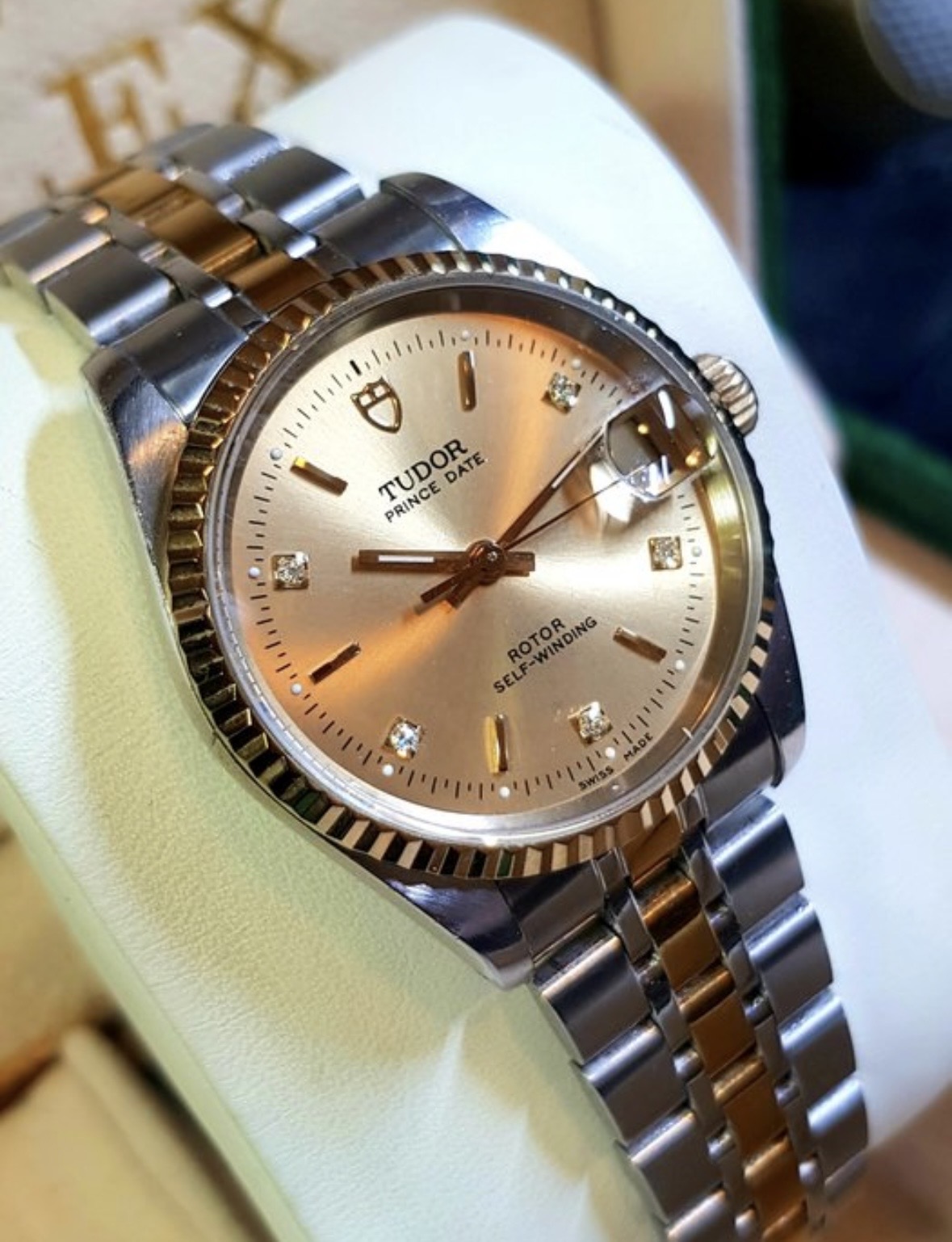
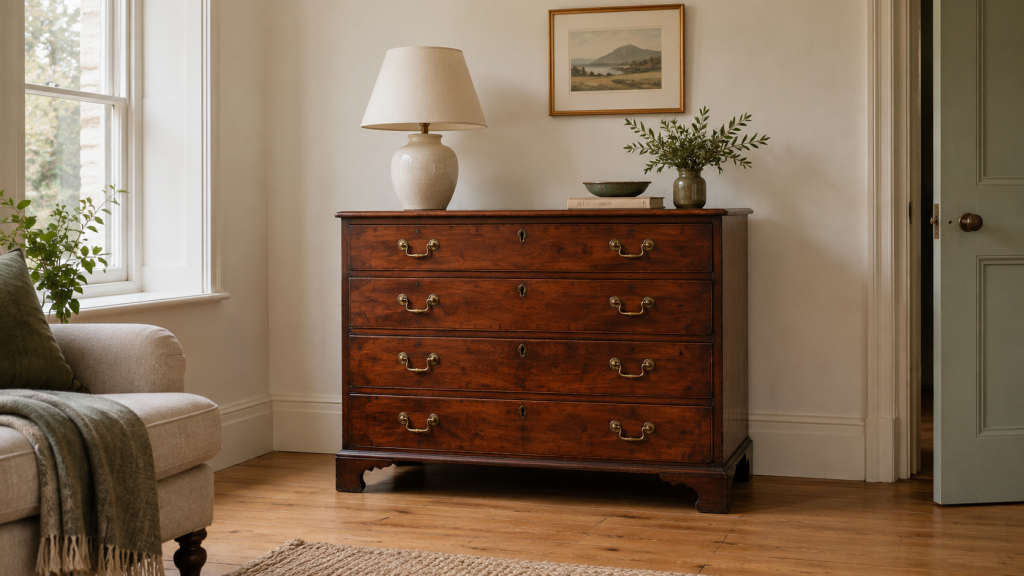
Collectable watch from the Mayo Antiques timepiece collection
0 watches
Select multiple options to refine the collection
    No watches match these filters.
    Curated Fine Jewellery

    Jewellery

    Discover distinctive rings, necklaces, earrings and collectable pieces selected for craftsmanship, stones and character.

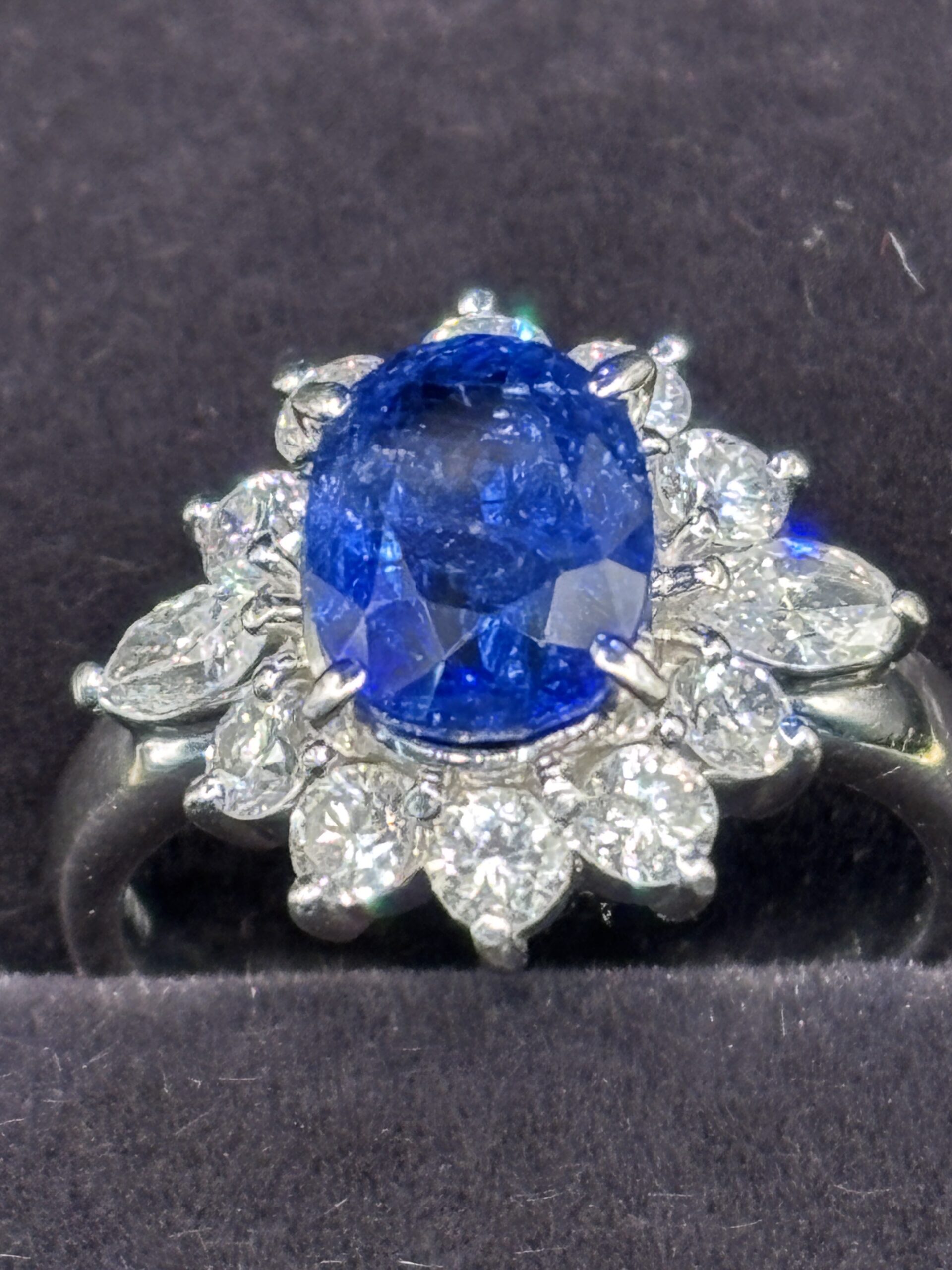
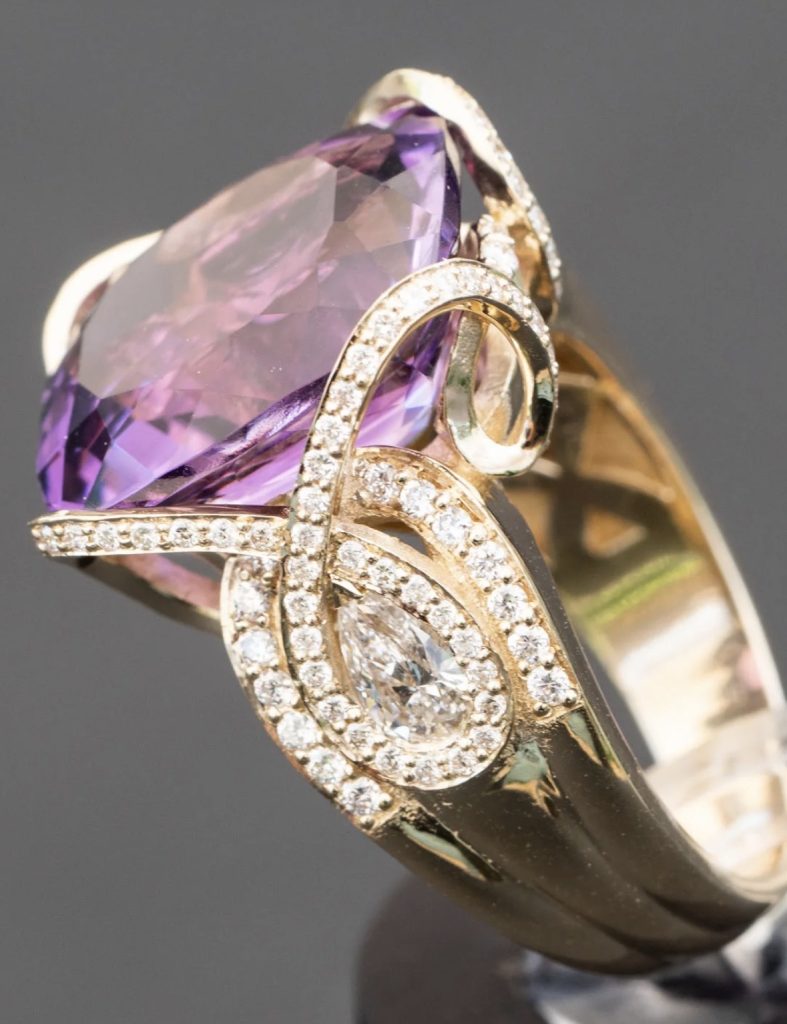
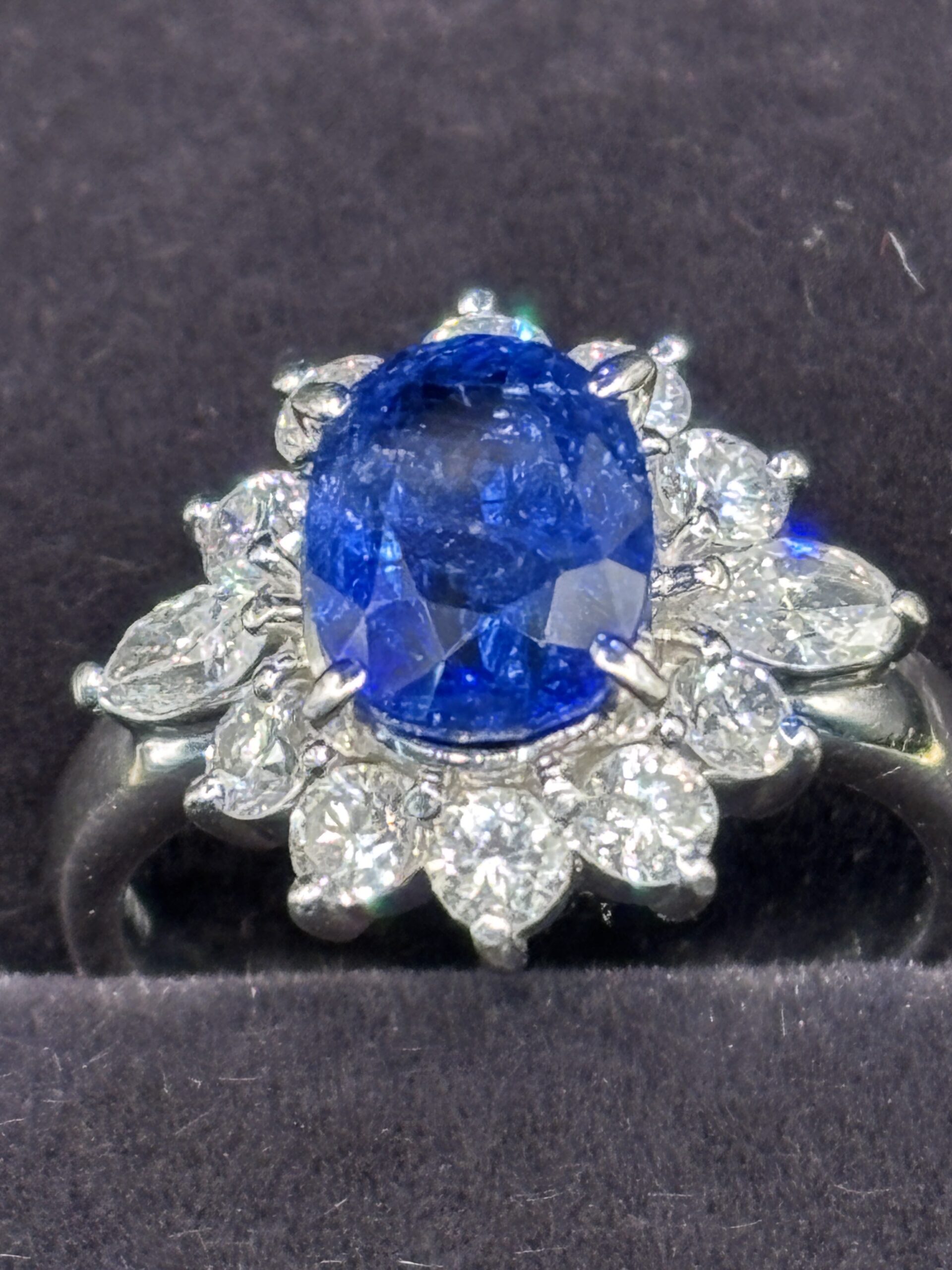
    Sapphire and diamond ring from the Mayo Antiques jewellery collection
    0 pieces
    Select multiple options to refine the collection
      No pieces match these filters.
      ●  Castlebar, IrelandEST. 2020
      Browse collections
      Home Uncategorized How to Choose an Antique Chest of Drawers for a Modern Home

      How to Choose an Antique Chest of Drawers for a Modern Home

      drawer

      How to Choose an Antique Chest of Drawers for a Modern Home

      An antique chest of drawers is an easy piece to introduce into a modern home. It has a clear purpose, needs little styling and can bring warmth to a room that otherwise feels rather…
      4 minute read26 October 2026

      How to Choose an Antique Chest of Drawers for a Modern Home

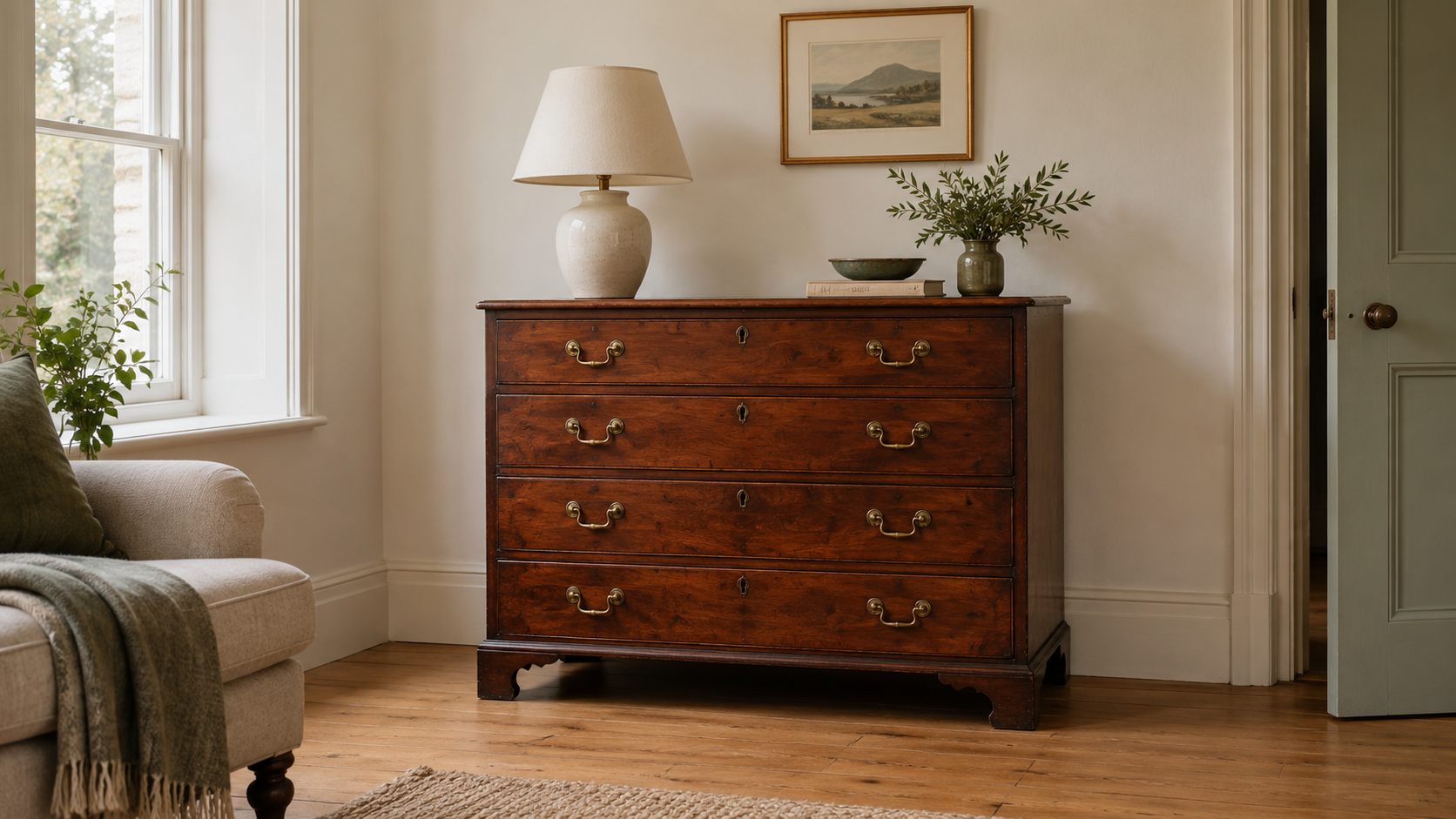
      An antique chest of drawers is an easy piece to introduce into a modern home. It has a clear purpose, needs little styling and can bring warmth to a room that otherwise feels rather new.

      The right one should be enjoyable to use. Before falling for a beautiful drawer front or a set of brass handles, think about where it will stand and what will go inside.

      Start with the space you actually have

      Measure the available width, height and depth. Include skirting boards, nearby sockets and the space needed to open the drawers while standing in front of them.

      Depth is particularly easy to overlook. A chest may fit along a bedroom wall but leave an awkward passage beside the bed. In a hallway, projecting handles can make a substantial piece feel deeper than its measurements suggest.

      Mark the footprint on the floor with masking tape. This gives you a better sense of its presence than measurements on a screen.

      Check the delivery route too, including stairs, landings and tight turns.

      Choose between a lower chest and a tallboy

      A lower chest provides a useful surface for a lamp, mirror or artwork. It can work as bedroom storage, a landing piece or a cabinet in a sitting room.

      A tallboy draws the eye upwards and offers more storage without requiring the width of a long dresser. Its height also makes it a stronger visual feature.

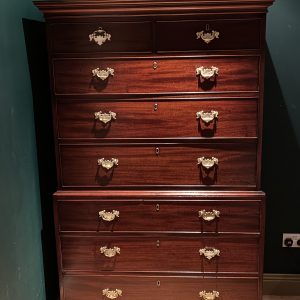
      Featured piece: Georgian mahogany chest on chest

      The 18th-century Georgian chest on chest is listed as circa 1760, restored and ready for use. It measures 174cm high, 105cm wide and 50cm deep.

      Those proportions make it worth considering where you have a generous wall height but limited space for a wider storage piece. Pair it with pale walls and a nearby contemporary chair rather than trying to furnish the whole room in the same period.
      Check whether the storage suits your routine

      Drawer count does not tell you everything. Ask about internal dimensions and whether each drawer opens and closes comfortably.

      For clothing, check that the interiors are clean and suitable for the fabrics you intend to store. For paperwork or household items, consider whether the drawers are deep enough.

      Useful questions include:

      • Do the drawers move freely?
      • Are the handles secure?
      • Have runners, bases or other components been repaired?
      • Does the chest stand firmly?
      • Are there any condition issues beyond those visible in photographs?

      Older furniture can show wear while remaining useful. The important point is understanding what you are buying.

      Look for proportions that work with modern furniture

      Straightforward shapes are often easy to combine with contemporary interiors. A rectangular Georgian chest can sit beside a modern bed without needing matching bedside tables.

      More decorative details can work equally well when given space. If the chest has prominent handles or richly figured timber, keep nearby accessories relatively quiet.

      A reference from the collection: George III chest of drawers
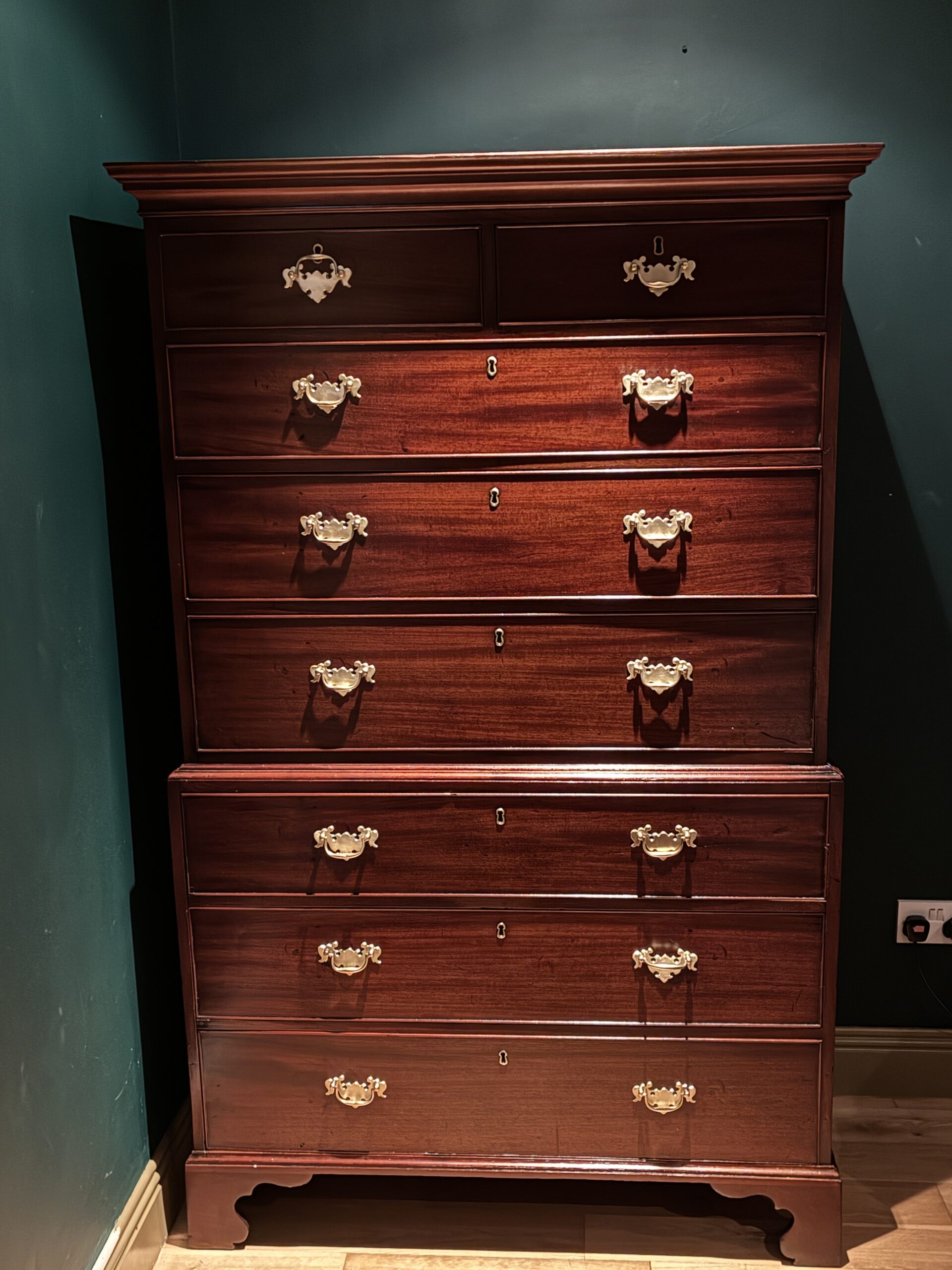
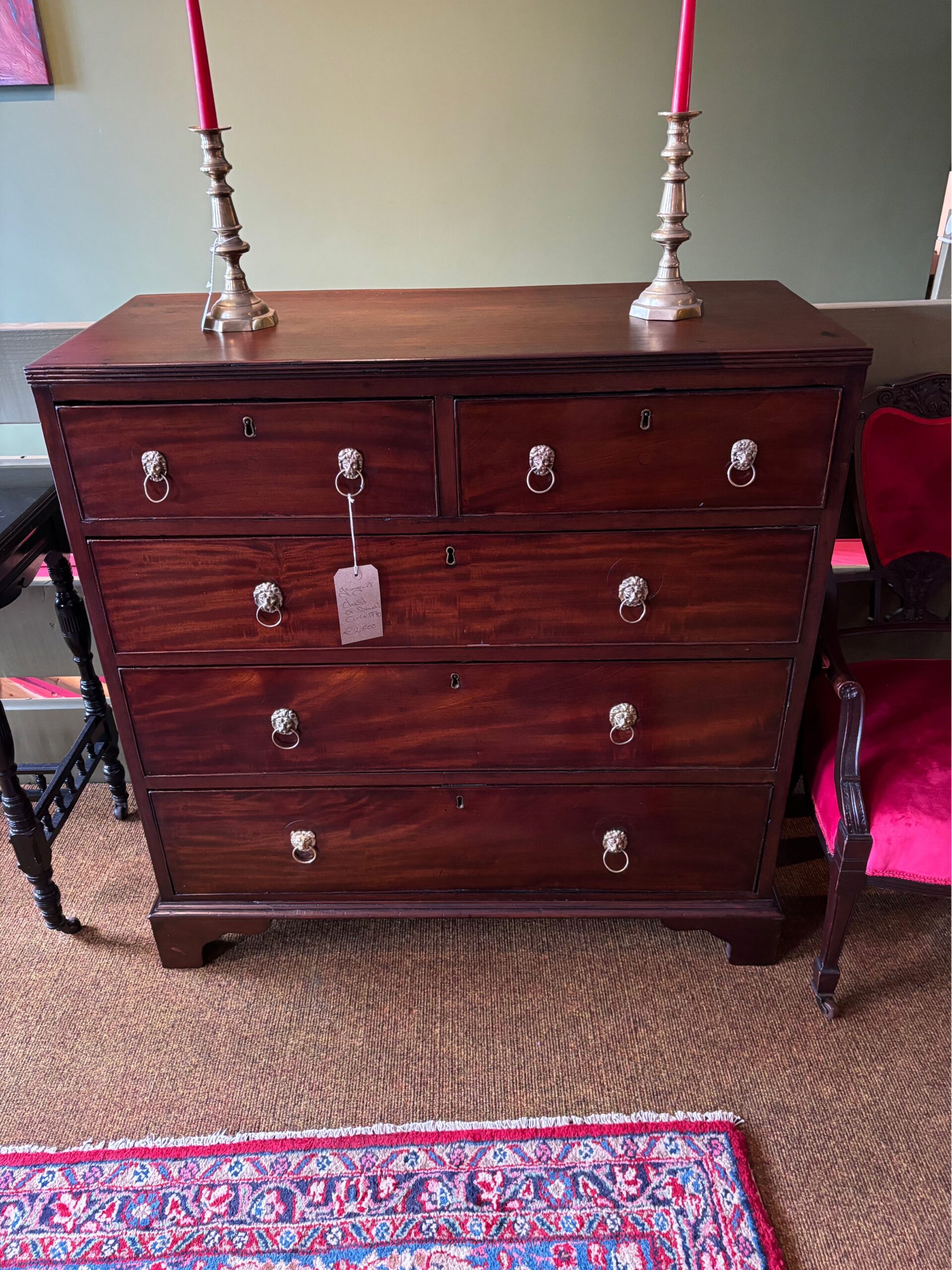
      This George III mahogany chest of drawers shows how a compact outline and decorative handles can sit together. Listed dimensions are 104cm high, 104cm wide and 45cm deep.

      This is a sold piece, included as a style and proportion reference. Its relatively shallow depth is a useful feature to look for when furnishing smaller rooms.

      Keep the styling simple

      Try a contemporary lamp at one end and a small ceramic bowl at the other. Alternatively, hang one substantial artwork above the chest and leave most of the surface clear.

      You do not need identical timber throughout the room. Dark mahogany can work alongside lighter wood when the other colours feel connected.

      For more ideas, read how to mix antique furniture with modern interiors.

      Find a chest that earns its place

      A good antique chest should solve a storage problem and be something you enjoy seeing every day. Begin with measurements and condition, then choose the timber and details that appeal to you.

      Explore the Georgian chest on chest or contact Mayo Antiques for help finding a suitable piece.

      Selected from the collection

      Furniture
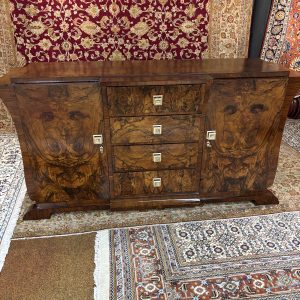
      View the collection

      Why Mayo Antiques

      Collected with knowledge. Chosen with confidence.

      Discover characterful pieces with clear information and personal guidance from our Castlebar showroom.
      Castlebar showroomSee pieces in person and speak with our knowledgeable team.
      Carefully selectedCollections chosen for craftsmanship, condition and enduring character.
      Clear product detailsPractical dimensions, condition notes and available history shared clearly.
      Delivery guidanceSupport for safely moving fine, delicate and one-of-a-kind pieces.

      Leave a Reply

      Your email address will not be published. Required fields are marked *

      Knowing how to clean a Persian rug at home starts with gentle, low-suction care. A Persian rug can be one of the most enduring pieces in your home, but dust, everyday foot traffic, sunlight and accidental spills can gradually affect its fibres and colours.

      Fortunately, most routine Persian rug care is straightforward. The important part is knowing which cleaning methods are safe and when to leave the work to a specialist.

      How to Clean a Persian Rug at Home

      Before deciding how to clean a Persian rug, check its materials, age and condition. For routine cleaning, you will need a vacuum with adjustable suction and a clean, soft cloth.

      1. Vacuum Gently

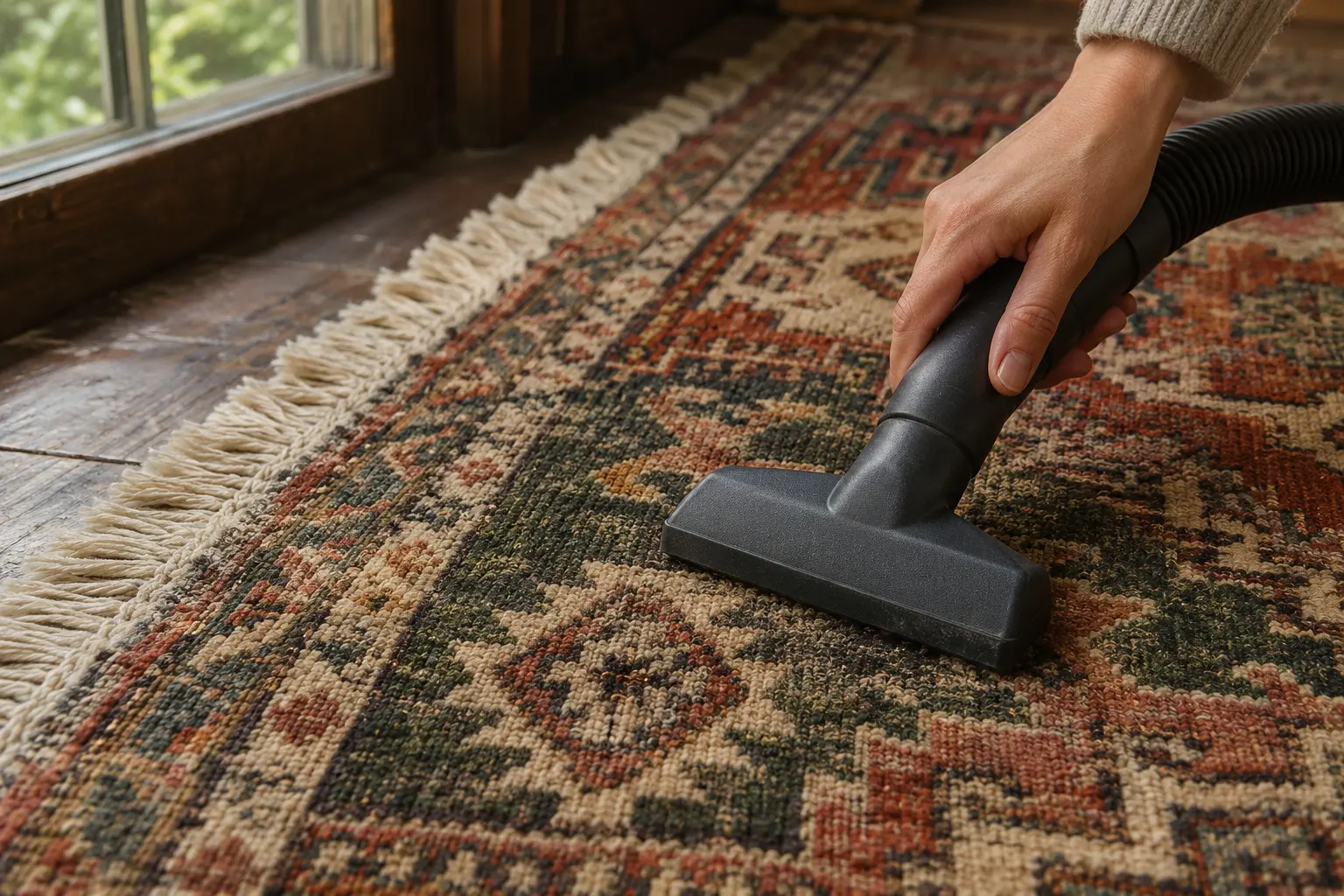
      Use a suction-only attachment with the rotating brush switched off. Move slowly in the direction of the pile rather than pushing against it.

      To identify the pile direction, run your hand across the rug. One direction will usually feel smoother.

      Avoid vacuuming over the fringes. On a hand-knotted rug, these are often the exposed ends of the foundation threads, not simply decorative tassels.

      2. Clean Beneath the Rug

      Dirt doesn’t remain on the surface. Fine particles gradually settle into the foundation, where repeated pressure can contribute to fibre wear.

      Periodically lift the rug and vacuum the floor beneath it. If the rug is structurally sound, gently vacuum the reverse using low suction. Avoid cleaning the reverse of fragile antique rugs without specialist advice.

      If you notice loose knots, weakened areas or damaged backing, stop cleaning and seek specialist advice.

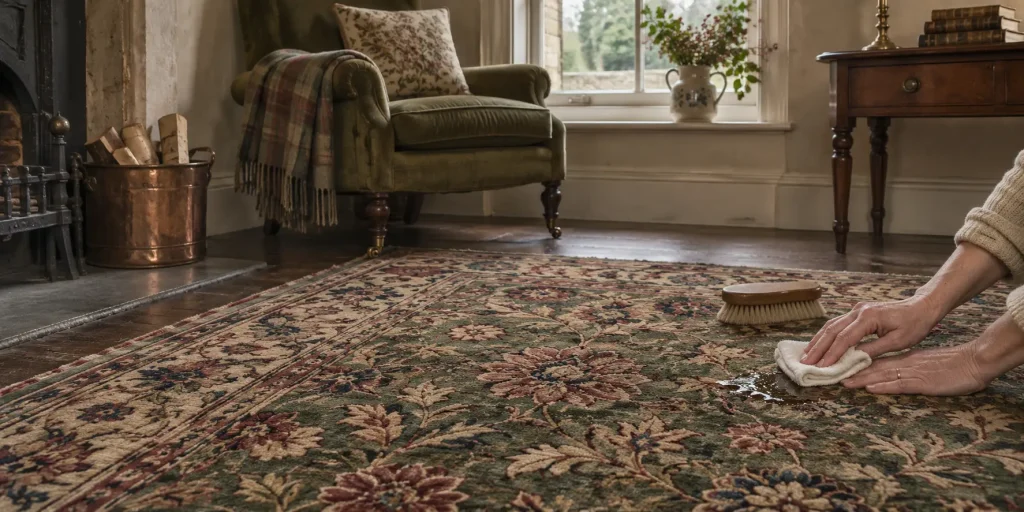
      3. Deal With Spills Immediately

      If tea, coffee or another liquid spills onto your rug:

      1. Absorb as much liquid as possible using a clean, white cloth.
      2. Blot gently without scrubbing or rubbing.
      3. Work from the outside of the spill towards the centre.
      4. Avoid adding cleaning products or water until the rug’s fibres and dye stability have been assessed.

      If the spill reaches the foundation, involves coloured liquids or causes dye transfer, contact a specialist rug cleaner. Moisture trapped within the foundation can remain even when the surface feels dry.

      Can You Wash a Persian Rug With Water?

      A complete home wash is generally not recommended for a valuable hand-knotted Persian rug.

      Many Persian rugs combine a wool pile with a cotton foundation. Others incorporate silk, delicate dyes or older repairs. Excessive moisture can cause colours to bleed, fibres to distort or the foundation to remain damp.

      The safest cleaning method depends on the rug’s construction, materials, condition and dye stability.

      How to clean a Persian rug at home using a low-suction vacuum attachment kept clear of the fringe
      Use low suction and keep the vacuum attachment away from the rug’s fringes.

      What Should You Avoid When Cleaning a Persian Rug?

      Some household cleaning methods can cause more damage than the original stain.

      Avoid these common mistakes:

      • Steam cleaning: Heat and moisture may affect dyes and the rug’s structure.
      • Carpet shampoos: Products designed for fitted carpets may leave residues or damage delicate fibres.
      • Scrubbing: Aggressive brushing can disturb the pile and spread stains.
      • Bleach or strong stain removers: These may permanently alter the original colours.
      • Soaking: Water trapped within the foundation can lead to distortion and deterioration.

      For an older or valuable rug, never assume that a product labelled suitable for wool is safe for the entire piece.

      How Can You Keep a Persian Rug Looking Its Best?

      Cleaning is only one part of maintaining a handmade rug.

      • Rotate the rug periodically. Turning it approximately every six to twelve months, where practical, helps distribute foot traffic and light exposure.
      • Limit direct sunlight. Prolonged exposure can gradually fade colours and weaken fibres. Use curtains or blinds in particularly bright rooms.
      • Use a suitable underlay. A non-adhesive, compatible rug underlay helps minimise slipping and friction against hard flooring.
      • Watch for moth damage. Check beneath furniture and along the edges for small holes, loose fibres or signs of insects.

      In Ireland’s often damp climate, it is also worth checking that the floor beneath your rug remains dry and well ventilated.

      When Does a Persian Rug Need Professional Cleaning?

      Consider professional attention when the rug has embedded dirt, persistent odours, significant staining, dye movement or visible damage.

      A specialist can assess the fibres, dyes and foundation before recommending treatment. Professional advice is especially important when you are unsure how to clean a Persian rug with delicate fibres, unstable dyes, older repairs or silk.

      There is no universal cleaning interval. A rug in a busy hallway will generally need attention sooner than one in a lightly used sitting room.

      Caring for a Rug Worth Keeping

      A well-chosen Persian rug deserves care that respects its craftsmanship. Gentle vacuuming, prompt attention to spills and protection from unnecessary wear can help preserve its character for years.

      If you’re exploring different weaving styles, materials and designs, browse the Persian rug collection at Mayo Antiques, featuring distinctive hand-knotted pieces selected for their craftsmanship and character.

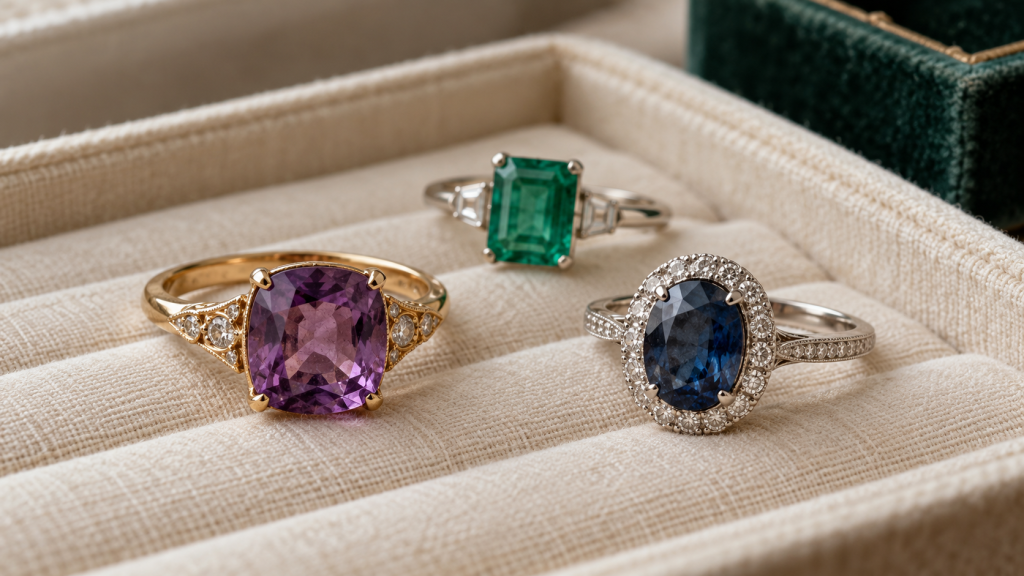
      A gemstone ring often catches your attention before you know much about it. Perhaps it is the purple of an amethyst, a deep blue sapphire or the way diamonds frame a coloured centre stone.

      That first attraction matters. But before choosing, take a closer look at the details that photographs and carat weights cannot explain on their own.

      Colour, cut and setting work together. Understanding their relationship helps you compare rings with more confidence—and find one you will enjoy wearing.

      Begin with how you want to wear the ring

      Think about whether you want an everyday piece, an occasional statement ring or something to mark a particular moment.

      A large gemstone can be wonderful for an evening out, while a lower setting may feel more comfortable during your normal routine. Try to judge the ring as something you will wear, rather than simply something you admire in a display.

      Four things to consider

      Colour

      Look for a shade you enjoy in ordinary daylight as well as indoor lighting.

      Cut

      Notice how the facets show the stone’s colour and how it looks as you turn your hand.

      Setting

      Consider the metal, the height of the stone and how its edges are supported.

      Comfort

      Check the fit, width and weight, including whether the ring turns or catches on clothing.

      Understand gemstone colour before comparing size

      Two stones described as blue sapphire can look quite different. One may appear lighter and brighter; another may have a deeper, more subdued colour.

      Three terms help explain those differences:

      • Hue: the main colour you see, including any secondary colour.
      • Tone: how light or dark the stone appears.
      • Saturation: the strength or intensity of its colour.

      A deeper colour is not automatically the better choice for every person. Compare several examples and notice which you prefer on your own hand. These distinctions are also useful when asking a jeweller to describe a stone more precisely.

      Ask to see the ring in more than one lighting condition. A photograph taken under bright display lighting may give a different impression from the ring beside a window.

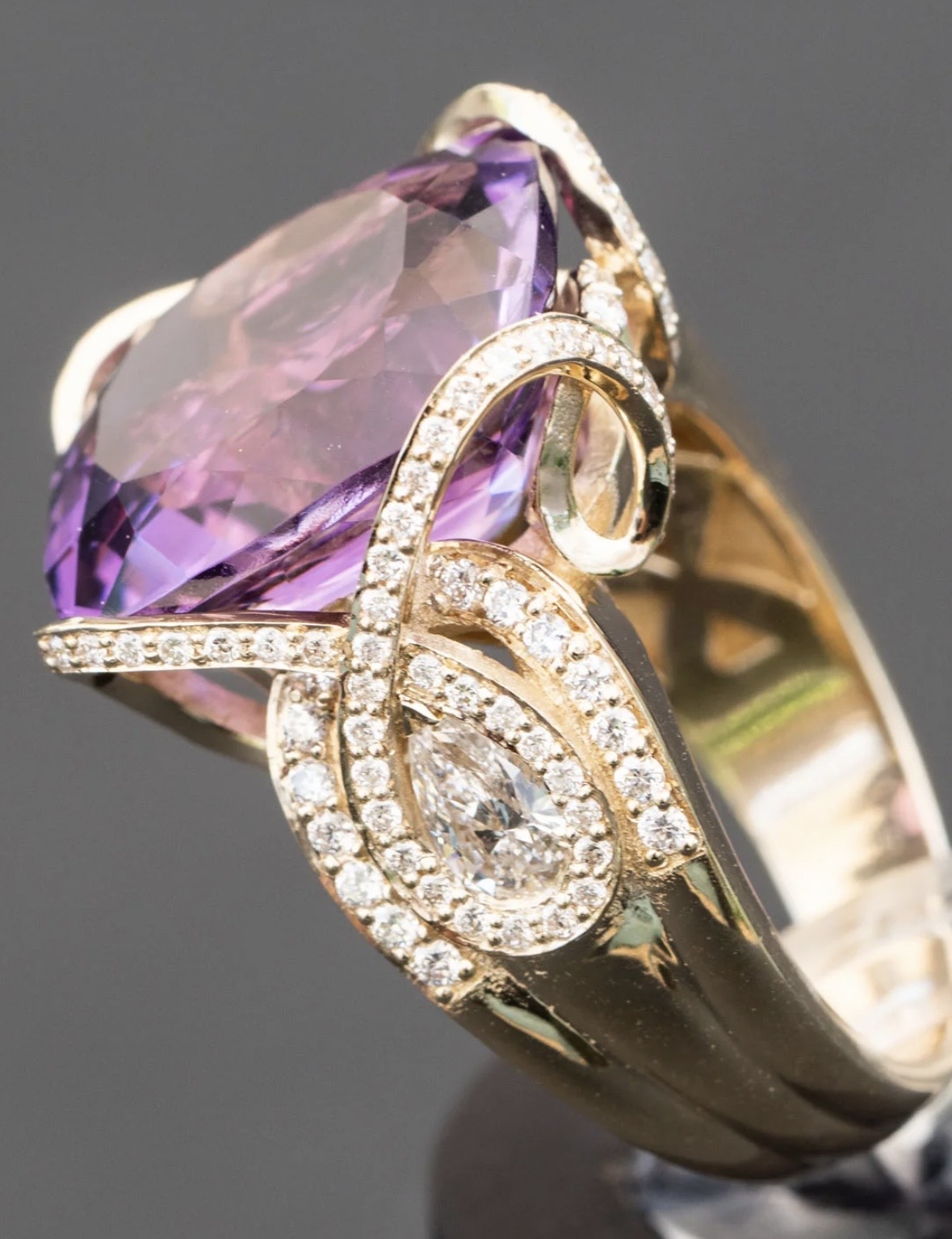
      Featured piece: the Lili amethyst ring

      The Lili amethyst ring centres on a 12.00-carat cushion mixed-cut natural amethyst, with 1.25 carats of natural diamonds.

      It is a useful example of a ring where colour leads the design. The purple centre stone provides the main visual interest, while the diamond detailing adds contrast around it.

      The listing gives the amethyst’s measurements as 16.03 × 14.25 × 8.89mm. Those dimensions help you understand its proportions more clearly than carat weight alone.

      View the Lili amethyst ring →

      Look beyond the outline when judging cut

      Shape and cutting style describe different things.

      The shape is the outline you recognise: oval, round, pear or cushion, for example. Cutting style describes the arrangement of facets across the stone.

      When viewing a faceted gemstone, move it gently and look across its whole surface. Does the colour remain appealing? Do some areas appear persistently dark? Is there a noticeably pale or see-through area in the centre?

      These observations are useful questions to discuss with the jeweller. Coloured-stone cutting involves balancing colour, proportions and the characteristics of the original material; there is no single ideal arrangement for every gemstone.

      Shape and cutting terms at a glance

      Shape and cutting terms at a glance

      Term What it describes What to consider
      Oval An elongated, curved outline How its length and width sit on your finger
      Cushion A square or rectangular outline with rounded corners Whether you prefer softer or more elongated proportions
      Pear A rounded end tapering to a point The orientation you prefer and protection around the tip
      Emerald cut A rectangular shape with cut corners, usually with step facets The appearance of colour and clarity through its broader facets
      Mixed cut A combination of cutting styles How the different facets work together in the finished stone

      An emerald-cut sapphire is still a sapphire. “Emerald cut” describes its shape and cutting style, rather than its gemstone identity.

      An emerald-cut sapphire is still a sapphire. “Emerald cut” describes its shape and cutting style, rather than its gemstone identity.

      Choose a setting that suits the stone and your routine

      The setting affects the ring’s appearance, but it also holds and supports the gemstone.

      Claws leave much of the stone visible. A bezel surrounds its edge with metal. A halo frames the centre with smaller stones, while a three-stone arrangement creates a different balance across the finger.

      Look at the ring from the side as well as from above. A design that appears compact in a product photograph may stand quite high above the hand.

      Protective settings can help shield vulnerable edges, but no setting makes a gemstone immune to damage. Ask how the particular stone and design suit your intended wear.

      Choose the ring you enjoy looking at—and the setting you will feel comfortable wearing.

      Metal colour is another personal choice. Compare the gemstone against yellow gold, white gold or platinum where possible. Notice how the complete combination looks on your hand rather than choosing the metal separately.

      Read carat weight alongside measurements

      Carat is a measure of weight, not visible size.

      Two gemstones of equal weight can have different dimensions because of their material and proportions. A deeper stone may carry more weight below the setting without appearing much larger from above.

      Before comparing rings, check:

      • The centre stone’s individual carat weight.
      • Its length and width in millimetres.
      • Whether a stated weight refers to one stone or several.
      • The separate weight of any surrounding diamonds.

      A description of a 12.00-carat amethyst with 1.25 carats of diamonds does not mean the centre stone weighs 13.25 carats.

      Ask about treatments and accompanying reports

      “Natural” and “untreated” are different descriptions. A naturally formed gemstone may have undergone treatment.

      Ask what is known about the stone, which treatments are disclosed and whether those details affect its care. For sapphire, GIA specifically advises buyers to ask about treatment. Laboratory reports can help establish identity and document detectable treatments within the scope of the examination.

      Featured piece: a pre-owned sapphire and diamond ring

      The 2.61-carat sapphire and diamond ring is listed with 1.10 carats of natural diamonds and a platinum band.

      Mayo Antiques describes it as pre-owned and lists GIA report number 7388712404. Request the report and review its exact wording alongside the product description before purchasing.

      This is also a useful reminder that a collection can include both pre-owned pieces and rings made to order. Check which applies to the ring you are considering.

      View the sapphire and diamond ring →

      Check fit and condition before deciding

      Try the ring on where possible. Notice whether it sits comfortably between neighbouring fingers and whether its weight causes it to turn.

      Ask about resizing before assuming it can be altered. The design, stone arrangement and required size change all need consideration.

      For a pre-owned ring, request clear photographs of the claws, shoulders and underside. Ask whether any repairs or maintenance are recommended.

      For a made-to-order piece, confirm the specifications, sizing process and production time before placing the order.

      Find a ring that feels like yours

      Start with colour, then look closely at cut, setting and comfort. Give the practical details as much attention as the first impression.

      Explore Mayo Antiques’ jewellery collection or contact the team to discuss a particular ring, its specifications and the information available.

      A rug can look perfect in a photograph and still be the wrong choice for its intended position. A quiet bedroom and the route between the kitchen and sitting room place very different demands on a textile.

      When comparing wool and silk, begin with daily use. Appearance matters, but so does how confidently you can enjoy the rug once it is home.

      Why choose a wool rug?

      Wool is a sensible material to explore for living rooms and other regularly used spaces. Its surface often gives colour a softer appearance than a highly lustrous silk pile.

      That does not make every wool rug suitable for heavy traffic. Age, wear, repairs and construction still matter. A fragile older wool rug needs a different setting from a sound piece selected for everyday use.

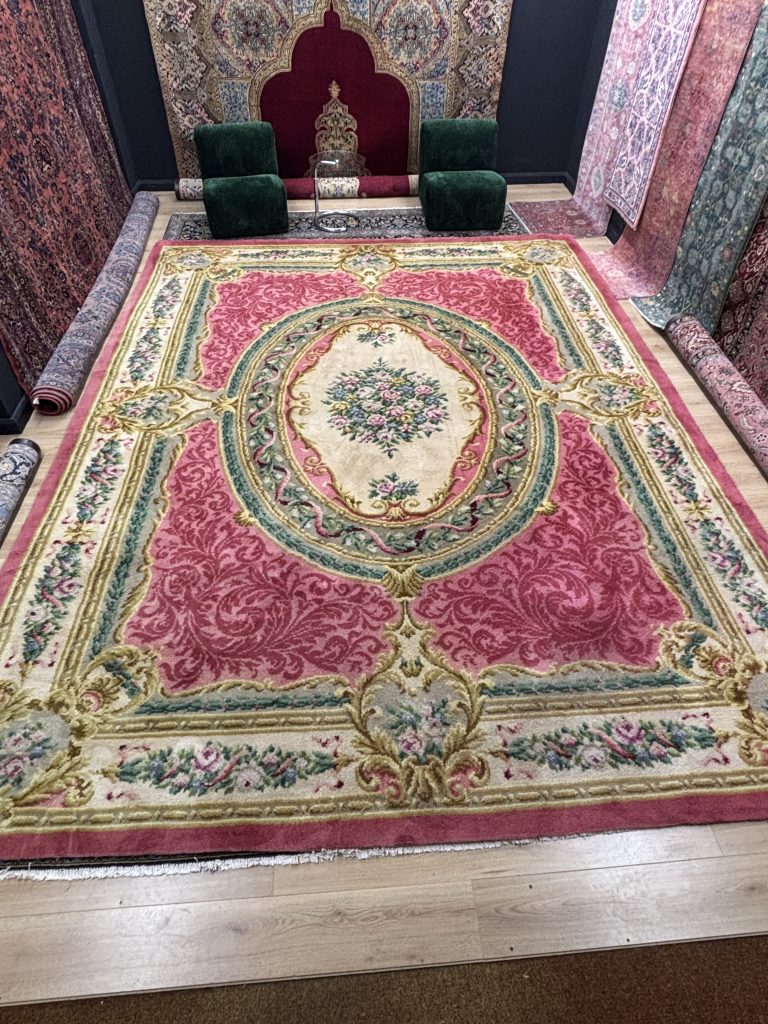
      Featured piece: wool-pile Kashan carpet

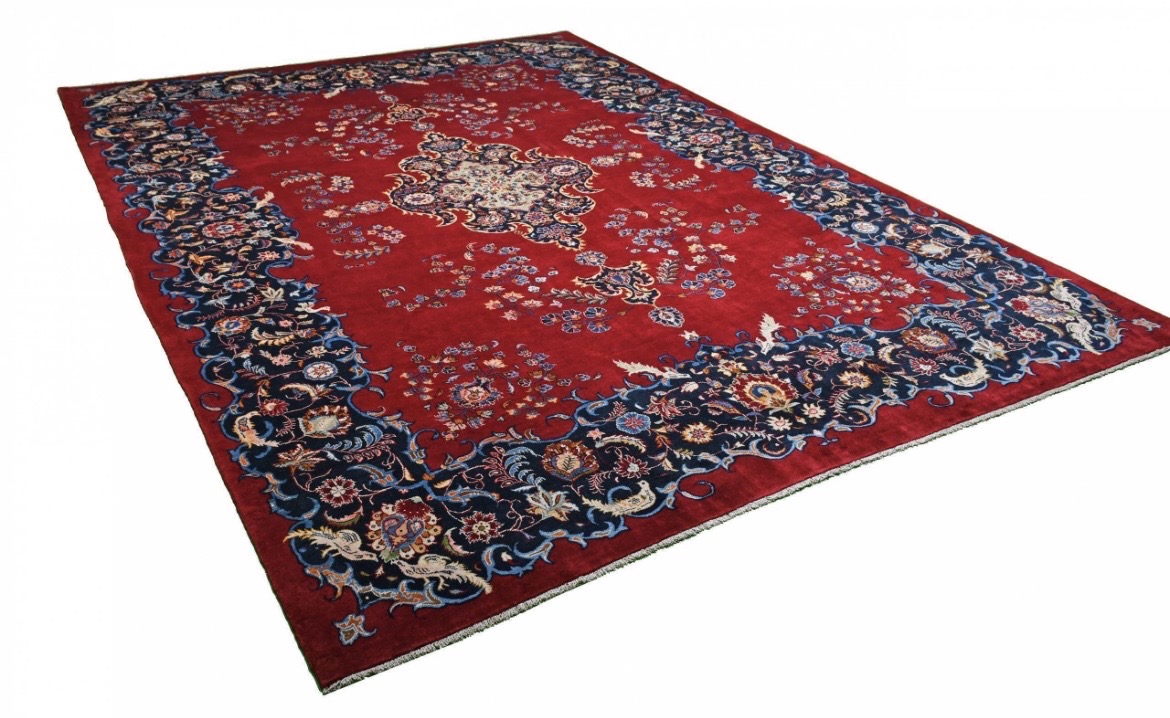
      The 402 × 295cm Kashan Persian carpet is listed with a virgin-wool pile, red/pink and blue colouring, and good condition.

      It is a useful example for someone considering a substantial traditional rug for a modern living space. Ask about its condition and intended placement alongside its dimensions.

      What does silk bring to a rug?

      Silk is particularly associated with lustre and finely worked detail. Its appearance can change as light falls across the pile, giving colours a different emphasis from different viewing positions.

      It also requires thoughtful care. Conservation guidance notes that wool-pile rugs generally withstand more wear than rugs containing silk.

      For a busy household, consider whether the proposed position involves outdoor shoes, frequent spills or constant movement. A quieter position may allow a finer rug to be enjoyed more comfortably.

      Wool-and-silk rugs deserve a closer look

      A label reading “wool and silk” does not tell you the proportion of each fibre or where the silk appears.

      Ask whether silk is used throughout the pile or in selected details. Request clarification if the listing does not specify this.

      Featured piece: Nain 9 La wool-and-silk carpet

      The 210 × 134cm Nain 9 La carpet is listed as virgin wool and silk over a cotton foundation, in beige and blue.

      This is a wool-and-silk example, rather than a pure-silk rug. Ask the team about the material distribution and whether its condition suits the room you have in mind.

      Another option: contemporary MAHLI Fine

      The 254 × 165cm MAHLI Fine carpet offers a different design direction. It is listed as Afghan-made, with virgin wool and silk, a cotton foundation and grey/multicoloured colouring.

      It may appeal if you like hand-knotted craftsmanship but prefer a more contemporary design. Its Afghan origin should be distinguished from Persian rugs made in Iran.

      Compare the materials in context

      ConsiderationWoolSilkWool and silk
      Visual effectOften softer and less reflectiveUsually more lustrousDepends on the design and fibre distribution
      Daily useOften a practical starting pointMore considered placement advisableAssess the individual rug
      What to askCondition, wear and constructionCondition and care requirementsProportions and location of silk
      Best decision methodMatch the piece to the room’s useMatch the piece to the room’s useMatch the piece to the room’s use

      Read “pile” and “foundation” separately

      The pile is the surface you see and touch. The warp and weft form the underlying structure.

      A wool-and-silk rug can have a cotton foundation. That description is not contradictory: it identifies different parts of the rug.

      Similarly, a product described as having a wool pile should not be assumed to be wool throughout.

      Plan for care before buying

      Ask for care advice specific to the rug. For handmade pieces, avoid assuming that domestic carpet-cleaning products or steam-cleaning methods are appropriate.

      If a spill occurs, blot rather than rub and seek specialist advice. Keep valuable rugs away from prolonged direct sunlight.

      Choose for the room, then the material

      Start with how the space is used. Compare actual pieces, ask about condition and choose a rug whose care needs fit your home.

      Browse the rug collection or speak with Mayo Antiques about a shortlisted piece.

      Antique furniture can bring warmth, craftsmanship and individuality to a modern interior—but the most successful rooms rarely look like period sets.

      The secret is contrast. An older piece should be allowed to stand confidently beside clean lines, contemporary art and practical modern furnishings. Whether you are decorating a new-build home, refreshing an apartment or adding contemporary touches to a traditional property, the aim is the same: create a room that feels personal, useful and naturally collected over time.

      Start with one confident antique

      If you are new to mixing periods, choose one substantial piece and build the room around it. A beautifully proportioned sofa, cabinet, chest or writing desk can give the space a focal point without making everything feel formal.

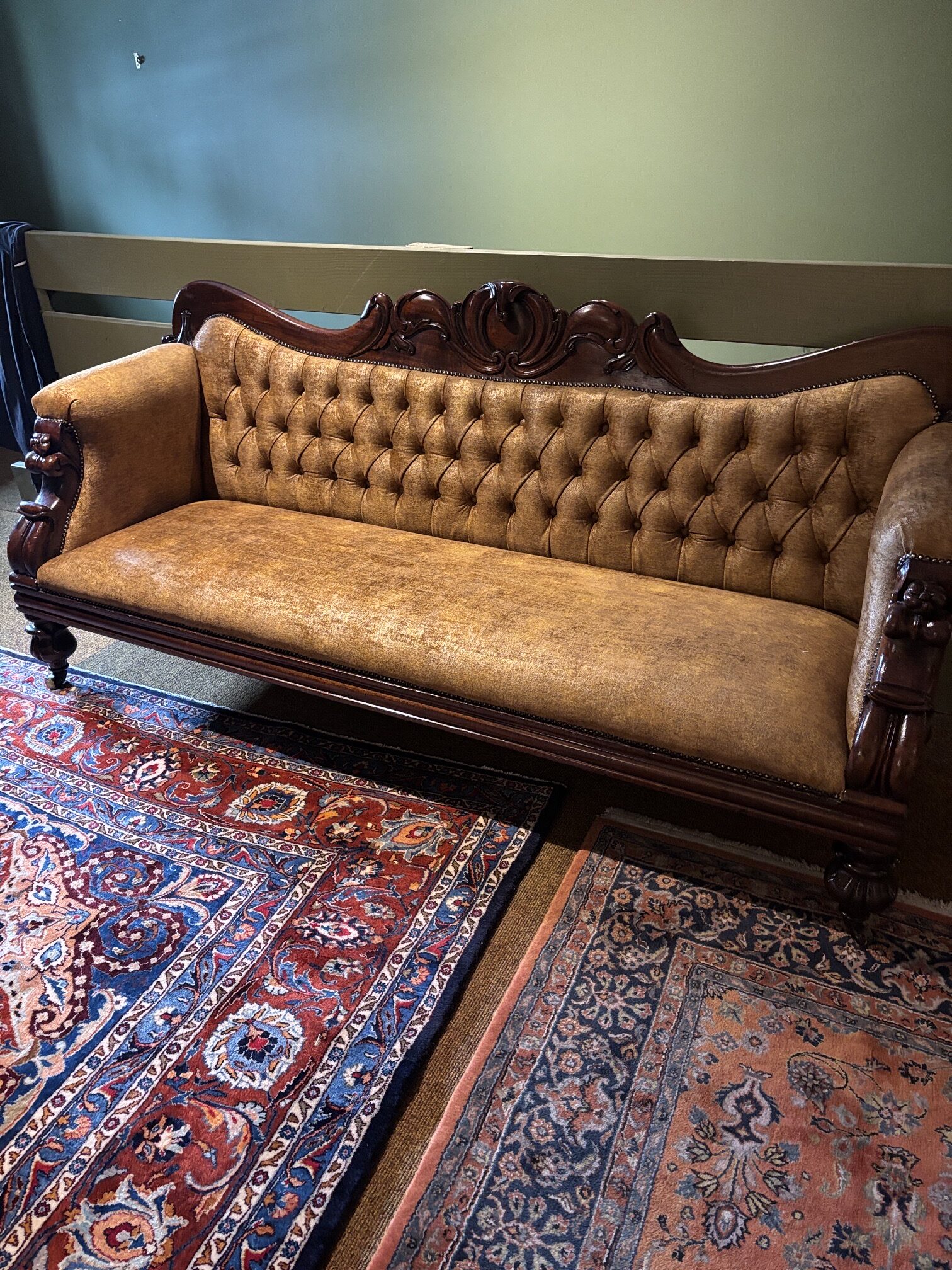
      The surrounding furniture does not need to imitate the antique. A mahogany sofa can work with a restrained contemporary coffee table, a plain wool rug and a sculptural floor lamp. In fact, the contrast helps the workmanship and silhouette of the older piece become more visible.

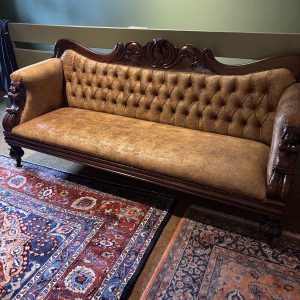
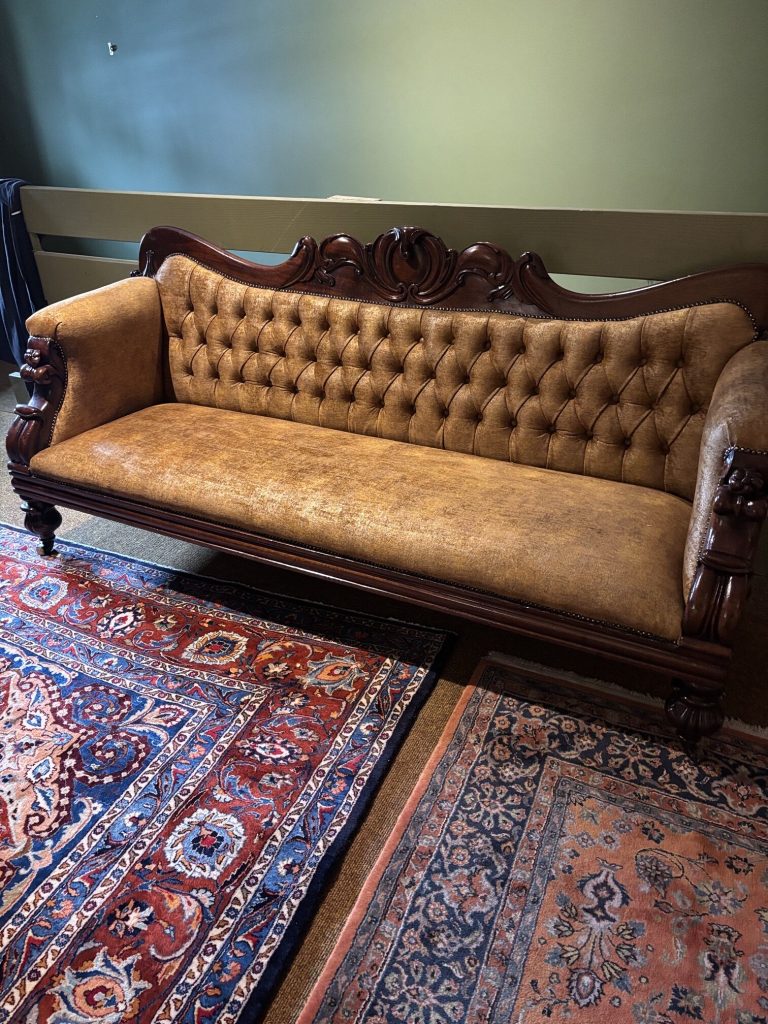
      William IV mahogany camelback sofa

      Featured piece

      William IV mahogany camelback sofa

      This Irish sofa brings an architectural silhouette and warm mahogany into the room, while its soft neutral upholstery makes it easier to combine with contemporary furniture.

      View product details →

      Use contrast deliberately

      A room becomes interesting when its pieces do not all come from the same decade. The aim is not to disguise an antique among reproductions; it is to make the difference between periods feel intentional.

      Dark polished timber is especially effective against pale plaster, warm white paint, limestone and natural fabrics. More decorative furniture can sit successfully beside minimalist objects because each brings out the qualities of the other.

      The best mixed interiors feel connected by proportion and atmosphere—not by a single period.

      Try to create contrast in one or two areas rather than everywhere at once. If the antique has a complex shape, keep the surrounding colours calm. If the room already contains bold colour and pattern, choose an antique with a simpler outline.

      Let colour and shape connect the room

      Colour is one of the easiest ways to bridge different periods. You do not need to match every tone precisely. Instead, repeat a colour in two or three places so the room feels connected. A burgundy chair might relate to a stripe in a rug. The warm brown of a mahogany chest might be repeated in a picture frame or lamp base.

      Shape can create an equally subtle connection. A curved antique sofa can relate to a round modern coffee table. The softened corners of an old cabinet might be echoed by an arched mirror or globe light.

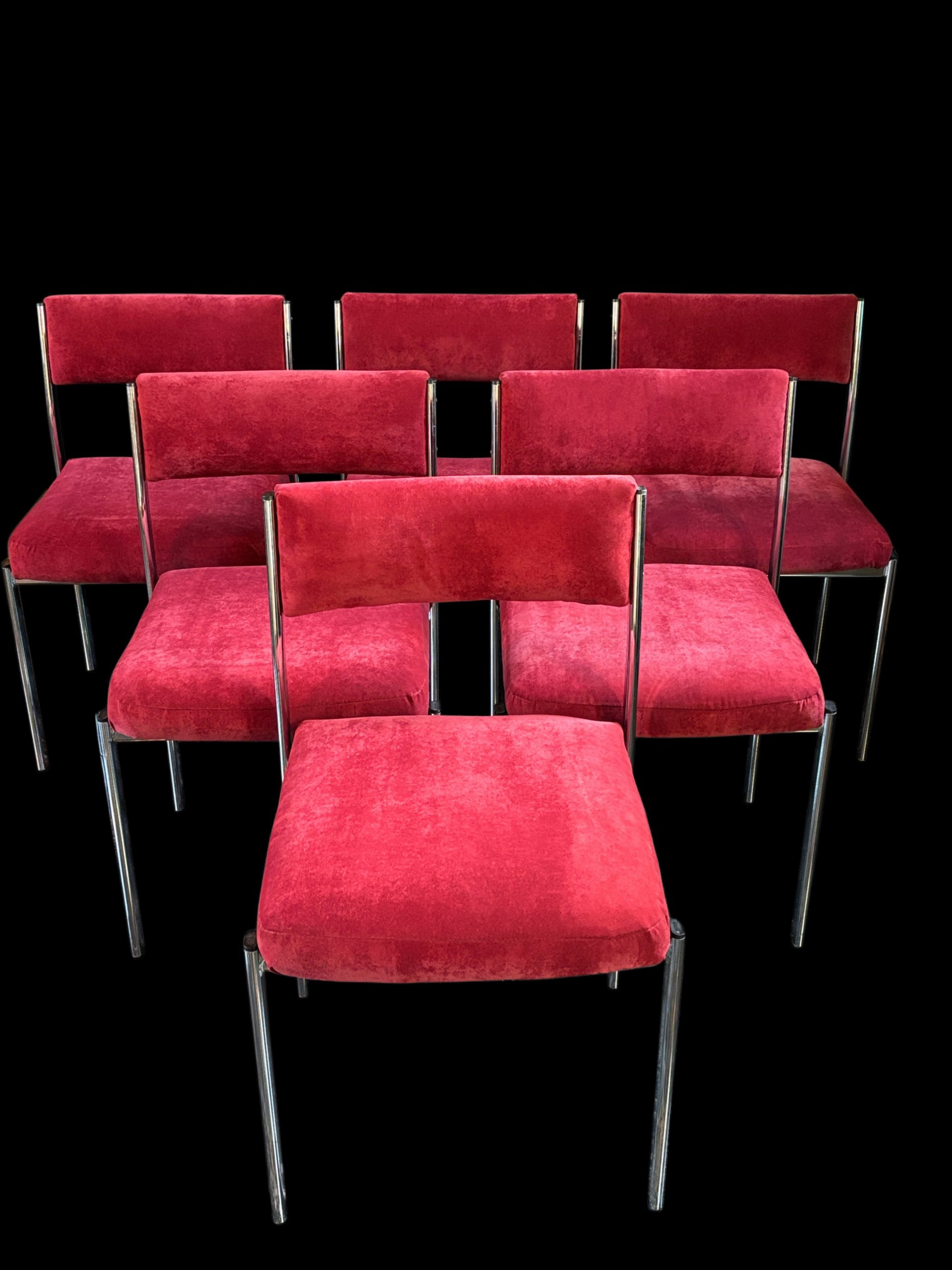
      Set of six ruby-red 1970s dining chairs

      Featured piece

      Ruby-red 1970s dining chairs

      Ruby-red velvet and chrome tube frames make this restored set a natural bridge between antique furniture and a clean modern dining space.

      View product details →

      Pair chairs like these with a contemporary oak or stone table, a restrained pendant light and modern ceramics in deep red, rust or plum. The result feels collected rather than purchased as one matching suite.

      Choose antiques that earn their place

      Antique furniture should not have to exist purely for display. Chests, bureaus, side tables and cabinets can provide valuable storage while giving a modern room greater depth.

      A tall chest is particularly useful where floor space is limited. It offers generous storage through height rather than width, making it well suited to bedrooms, hallways and alcoves.

      18th-century Georgian mahogany chest on chest

      Featured piece

      Georgian mahogany tallboy

      This restored 18th-century chest offers useful vertical storage. Against a pale wall, its timber brings warmth without demanding a fully traditional room.

      View product details →

      Keep the top simply styled with a contemporary lamp, one ceramic object or a small framed work. The antique remains the focus while the room stays calm and current.

      Give decorative furniture room to speak

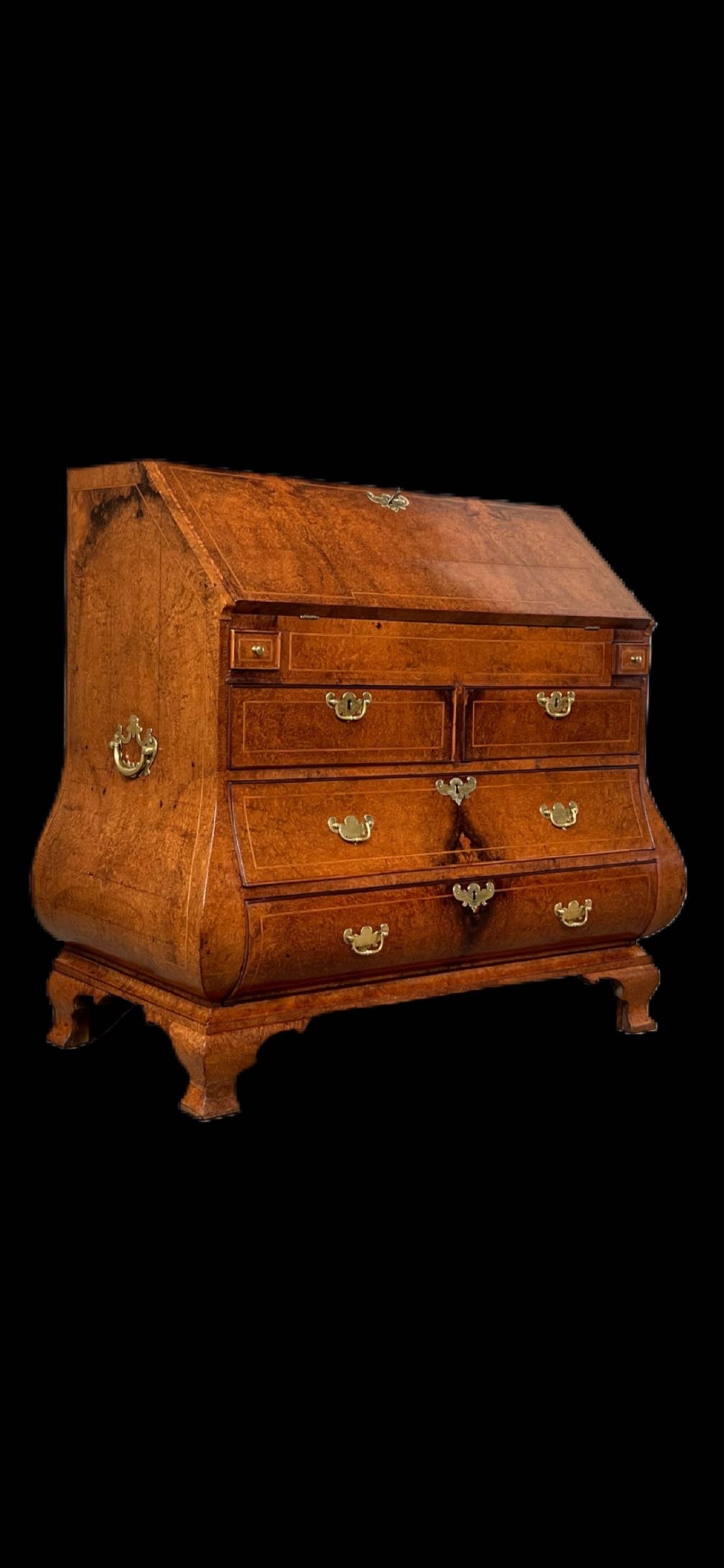
      Some antiques are naturally more expressive. A bombe bureau, marquetry cabinet or highly figured sideboard deserves to be treated as the room’s central feature.

      Avoid placing several equally detailed pieces beside one another. Give the focal piece breathing space and keep nearby furniture visually lighter. This allows the eye to settle and prevents the room from becoming crowded.

      18th-century Dutch amboyna and oak bombe bureau

      Featured piece

      18th-century bombe bureau

      Its sculptural form, richly figured veneer and original decorative fittings make this the kind of piece that can transform an otherwise restrained room.

      View product details →

      Balance scale and leave breathing space

      Proportion matters more than age. A high-backed sofa may need a large artwork or tall lamp to balance its height. A substantial cabinet may overwhelm a narrow room but feel perfectly at home against a long open wall.

      Wall spaceMeasure the clear width and allow room around decorative edges.
      AccessCheck doorways, stairs and turning space before delivery.
      Daily useAllow space for drawers, doors and writing surfaces to open.
      Visual weightBalance substantial timber with lighter furniture and open floor area.

      Antique furniture often contains more visual information than modern furniture: mouldings, grain, carving, hardware and signs of age. Negative space keeps the room feeling modern and allows the antique to read as a deliberate choice.

      Add contemporary art, lighting and textiles

      Contemporary art is one of the best companions for antique furniture. A large abstract painting can loosen the formality of a traditional chest or sofa, while modern lighting prevents the room from feeling like a period reconstruction.

      Textiles can unite furniture from different eras. Linen curtains, plain wool upholstery and tactile cushions soften the distinction between polished timber and contemporary surfaces. A hand-knotted rug can introduce colour and pattern while grounding the entire arrangement.

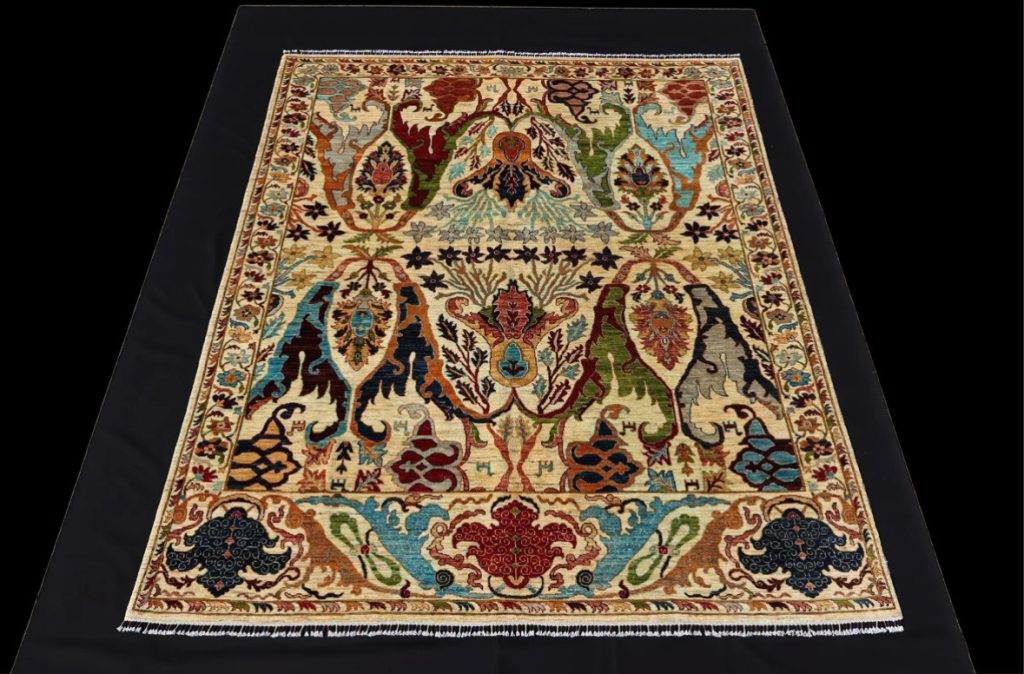
      Explore the Mayo Antiques Persian rug collection or read our guide to choosing the right Persian rug for your home before deciding on size and placement.

      What to check before buying antique furniture

      Before purchasing, ask for clear information about dimensions, condition, previous restoration, original fittings and delivery access. Variation, wear and patina are part of an antique’s story. The important distinction is between attractive age and damage that affects structure or everyday use.

      Check What to ask Why it matters
      Dimensions Height, width, depth and open-door clearance Confirms the piece fits both the room and delivery route
      Condition Repairs, movement, wear and replaced components Helps distinguish stable patina from structural issues
      Function Drawer, lock, hinge and upholstery condition Ensures the piece suits everyday use
      Delivery Access, handling and installation requirements Protects both the furniture and the property

      For advice about a particular item, contact Mayo Antiques with photographs or measurements of the intended room.

      Frequently asked questions

      Can you mix different types of wood in one room?
      Yes. Different timbers make a room feel layered and natural. Repeat each broad tone at least once and use a rug, paint colour or textile to connect them.

      Does antique furniture work in a new-build home?
      It can work particularly well. Clean architecture provides a quiet backdrop for natural timber, patina and traditional craftsmanship.

      How many antique pieces should a modern room contain?
      There is no fixed number. Begin with one anchor piece and add more only when they provide a clear function, meaningful contrast or a piece you genuinely love.

      Can antique seating be reupholstered in modern fabric?
      Yes. New upholstery can make antique seating more practical and easier to integrate with a contemporary palette, provided the fabric respects the proportions and construction of the piece.

      Create a home that feels collected, not coordinated

      The best interiors are rarely tied to one period. Start with a piece you genuinely love. Give it room, connect it to the wider interior through colour or form, and allow the surrounding modern furniture to remain simple.

      The result will feel considered, comfortable and individual—not like a showroom and not like a museum.

      The most successful rug is not simply the most beautiful one in isolation. It is the piece that gives a room balance, warmth and a sense that it has always belonged there.

      A Persian rug can anchor a contemporary room, soften a formal interior or bring depth to a quieter space. The choice becomes easier when you consider the room first, then the rug’s visual character and finally the details of its making.

      Begin with the room, not the rug

      Before exploring colours or motifs, decide what role the rug will play. In a sitting room it may unite the seating arrangement; beneath a dining table it should remain generous enough for chairs to move comfortably; in a hallway it should create rhythm without crowding the edges.

      Living roomPlace at least the front legs of the main seating on the rug to connect the arrangement.
      Dining roomAllow useful space beyond the table so chair legs remain on the rug when pulled back.
      BedroomUse the rug to add softness where feet meet the floor, rather than hiding it entirely.
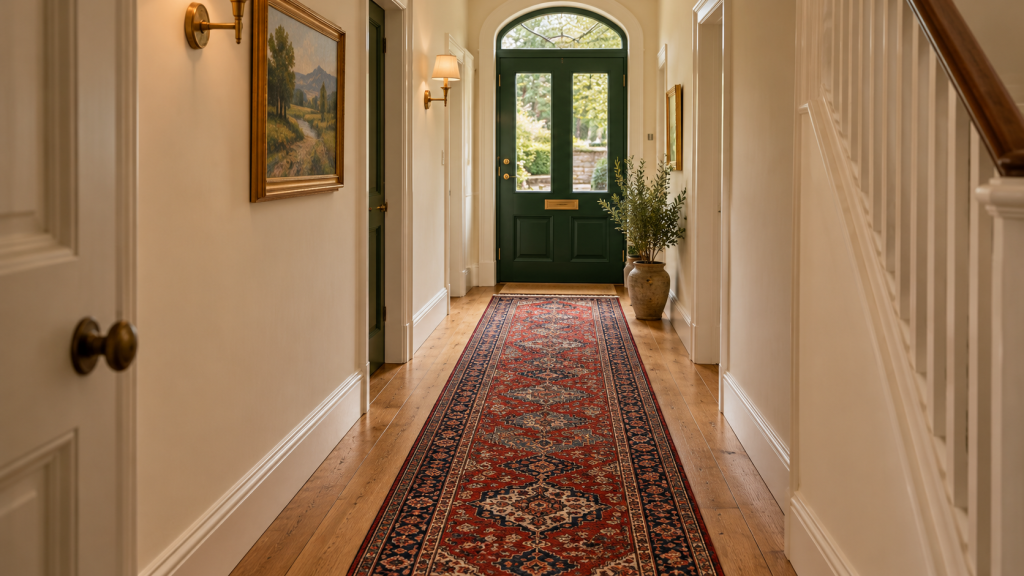
      HallwayLeave a visible border of flooring to frame the runner and make the passage feel wider.
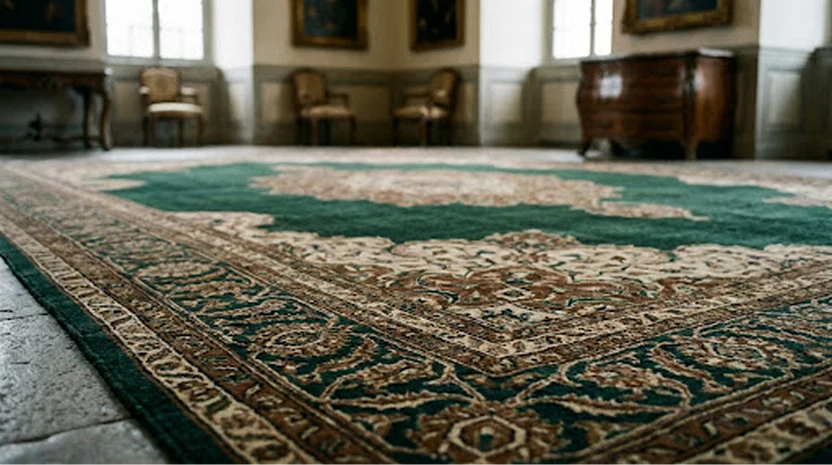
      Persian rug displayed in an elegant interior
      A well-proportioned rug connects furniture and creates a clear centre of gravity within the room.

      Choose colour and pattern with the whole room in mind

      Rather than matching one cushion or curtain exactly, look at the room’s overall temperature. Warm timber, aged leather and brass often sit naturally beside deep reds, indigo and softened gold. Paler grounds and quieter motifs can bring air to smaller rooms, while a richly patterned rug can carry a simpler interior.

      A fine rug does not have to match everything around it. It should make the room feel more complete.

      Understand weave and construction

      Hand-knotted rugs are built knot by knot, creating a structure designed to age with use. Origin, materials, knotting tradition and the hand of the maker all contribute to a rug’s character. Irregularities are not automatically flaws; they can be evidence of individual craftsmanship.

      Detail What to notice Why it matters
      Foundation Wool, cotton or silk Influences flexibility, weight and fineness
      Pile Texture and evenness Shapes feel, light reflection and durability
      Edges Selvedges and fringe Can reveal wear, repair and construction quality

      Ask about provenance and condition

      Condition should be read in context. Gentle wear may add character to an older rug, while significant repairs, colour run or weakened foundations deserve closer attention. Ask for clear photographs, dimensions and any available information about origin, age and restoration.

      Plan for how you will live with it

      A suitable underlay helps prevent movement and reduces wear. Rotate the rug periodically where sunlight or foot traffic is uneven, deal with spills promptly and seek specialist advice before deep cleaning an older or finely knotted piece.

      The right rug should invite daily use. Choose thoughtfully, then allow the piece to become part of the life and story of your home.

      A narrow hallway can be difficult to furnish. There may be no room for a console table, and even a small chair can interrupt the passage.

      A runner introduces colour and pattern without adding furniture. Getting the size right is the important part: it should fit the usable floor area comfortably and allow doors to open freely.

      Measure the narrowest part first

      Measure between skirting boards, then check anywhere the passage becomes tighter. Radiator pipes, door frames and fitted cupboards can reduce the usable width.

      Next, measure the uninterrupted length where the runner will sit. Include any doorway where its position could affect a threshold.

      A useful calculation is:

      Hallway width − runner width = flooring left visible on both sides.

      Divide that figure by two for a centred runner. For example, a 70cm runner in a 100cm passage leaves approximately 15cm on either side. This is an illustration, rather than a fixed rule for every hall.

      Compare actual runner widths

      A difference of ten centimetres can matter considerably in a narrow passage.

      Featured piece: Sarogh runner, 203 × 70cm

      The 203 × 70cm Sarogh Persian runner is a useful starting point for a shorter, narrower space.

      The listing describes a virgin-wool pile, cotton foundation and pink-and-blue colouring. At just over two metres long, it offers a different footprint from runners intended for a long corridor.

      Check whether the quoted length includes the fringe before marking its position.

      Choose length around the route through the house

      A runner does not need to stretch from wall to wall or cover every centimetre of the passage.

      Leave a deliberate area of flooring at each end. Where the hallway opens into another room or turns a corner, use that change in layout to guide its position.

      For a longer passage, compare longer runners rather than assuming several shorter rugs will create the same effect. Multiple rugs introduce more edges and require careful positioning.

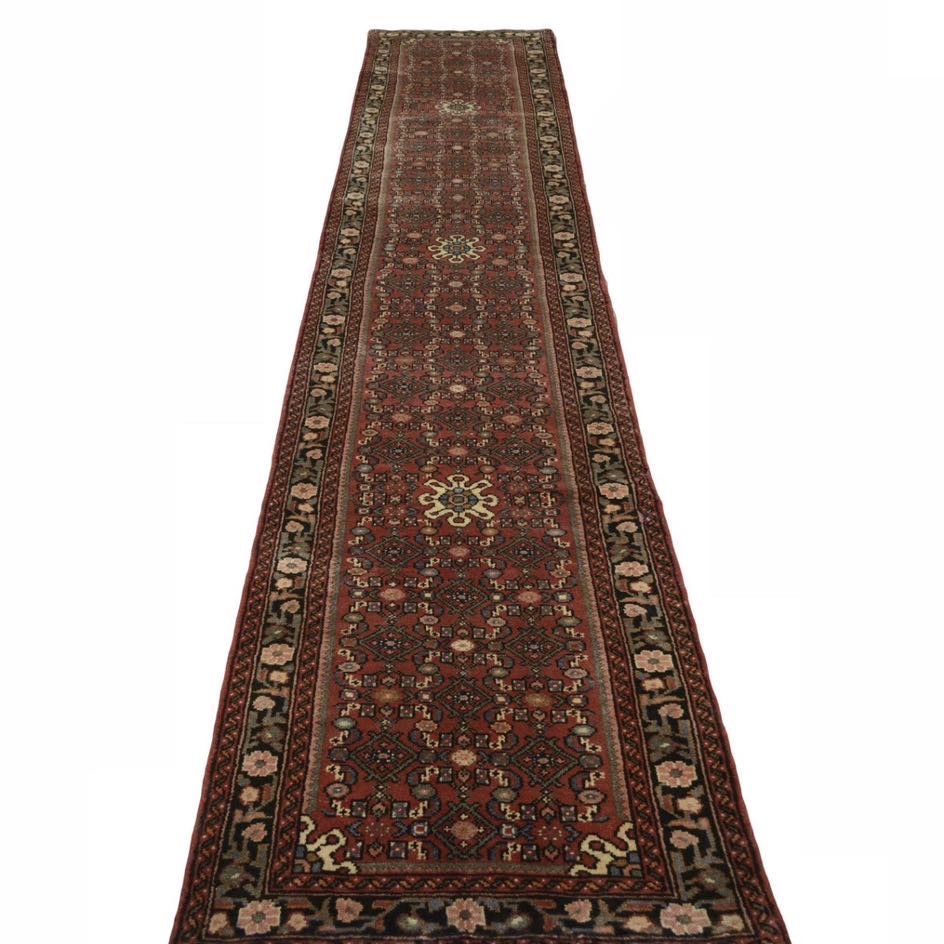
      Featured piece: Hamedan runner, 390 × 71cm

      The 390 × 71cm Hamedan Persian runner provides substantially more length while remaining close in width to the Sarogh.

      It is listed with a virgin-wool pile, cotton foundation and red-and-beige colouring. Its long, narrow proportions make it worth comparing against the measurements of an extended hallway.

      Check doors, pile and underlay together

      Open every nearby door across the proposed rug position.

      The clearance needs to accommodate the runner and its underlay together. Do not rely on a thickness figure alone: door position and floor levels also affect the result.

      Choose underlay appropriate to both the rug and the floor finish. Ask for advice rather than adding an unsuitable adhesive backing.

      If a door catches, reconsider the position or rug. A runner should not have to be forced into an awkward fit.

      Choose colours that connect adjoining rooms

      The hallway is often seen alongside a sitting room, kitchen or staircase. Consider those views together.

      Pink and blue can provide a softer link to pale walls and neutral furnishings. Red and beige can add warmth alongside timber or stone.

      Pattern can give an otherwise plain passage a focal point. Leave enough visible floor around the runner for its border to be appreciated.

      Do not confuse style with origin

      Some runners in a wider oriental-rug collection are made outside Iran. Their origin should remain clear even where a design name is familiar.

      For example, the 288 × 81cm Kazak runner is listed as Afghan-made, with a virgin-wool pile. It is an alternative to compare if an 81cm width fits your space.

      Check condition where feet will fall

      Ask for clear images of the centre, edges, ends and fringe. Look for wear or repairs along the likely walking route.

      An older runner may suit a quieter upstairs passage better than an entrance receiving wet shoes and grit. Keep the intended position in mind when discussing condition.

      Find the runner that fits your hallway

      Take width, length and door-clearance measurements before browsing. The shortlist becomes much easier when you know the dimensions your hallway can accommodate.

      Compare the Sarogh runner and Hamedan runner, or contact Mayo Antiques with your hallway measurements.

      Product