
How to Mix Antique Furniture with Modern Interiors
A practical guide to combining antique furniture with clean modern spaces—from choosing an anchor piece to balancing timber, colour, scale and contemporary art.
Antique furniture can bring warmth, craftsmanship and individuality to a modern interior—but the most successful rooms rarely look like period sets.
The secret is contrast. An older piece should be allowed to stand confidently beside clean lines, contemporary art and practical modern furnishings. Whether you are decorating a new-build home, refreshing an apartment or adding contemporary touches to a traditional property, the aim is the same: create a room that feels personal, useful and naturally collected over time.
Start with one confident antique
If you are new to mixing periods, choose one substantial piece and build the room around it. A beautifully proportioned sofa, cabinet, chest or writing desk can give the space a focal point without making everything feel formal.
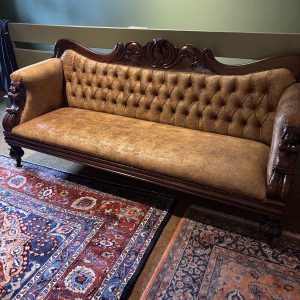
The surrounding furniture does not need to imitate the antique. A mahogany sofa can work with a restrained contemporary coffee table, a plain wool rug and a sculptural floor lamp. In fact, the contrast helps the workmanship and silhouette of the older piece become more visible.
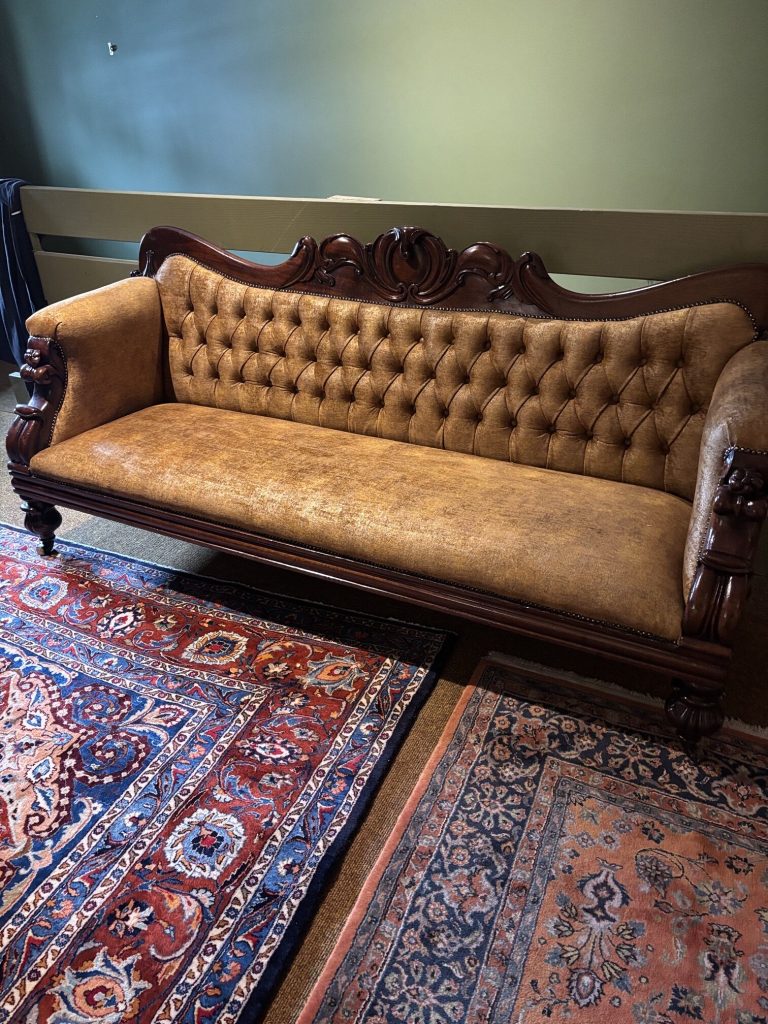
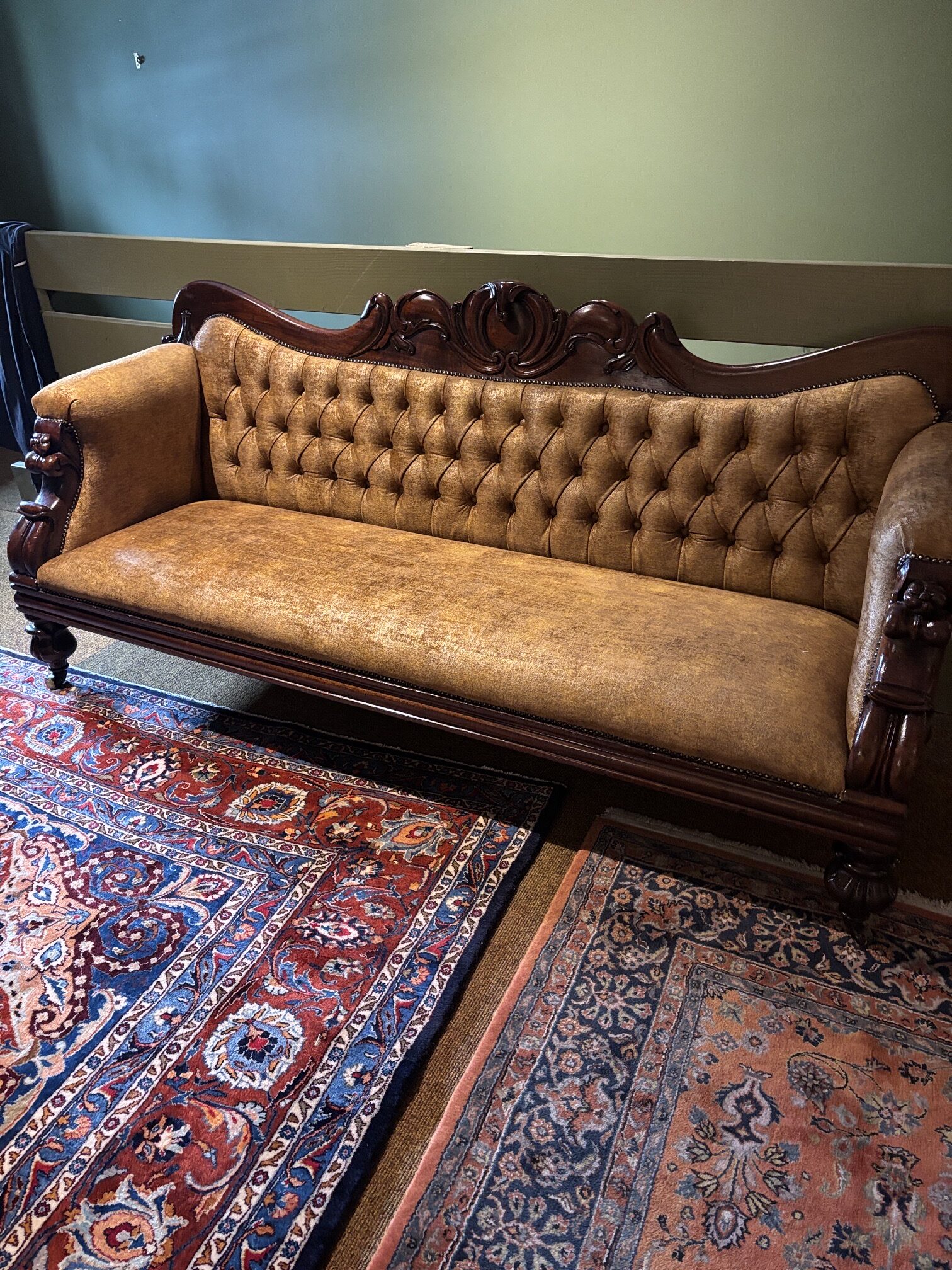
William IV mahogany camelback sofa
This Irish sofa brings an architectural silhouette and warm mahogany into the room, while its soft neutral upholstery makes it easier to combine with contemporary furniture.
Use contrast deliberately
A room becomes interesting when its pieces do not all come from the same decade. The aim is not to disguise an antique among reproductions; it is to make the difference between periods feel intentional.
Dark polished timber is especially effective against pale plaster, warm white paint, limestone and natural fabrics. More decorative furniture can sit successfully beside minimalist objects because each brings out the qualities of the other.
The best mixed interiors feel connected by proportion and atmosphere—not by a single period.
Try to create contrast in one or two areas rather than everywhere at once. If the antique has a complex shape, keep the surrounding colours calm. If the room already contains bold colour and pattern, choose an antique with a simpler outline.
Let colour and shape connect the room
Colour is one of the easiest ways to bridge different periods. You do not need to match every tone precisely. Instead, repeat a colour in two or three places so the room feels connected. A burgundy chair might relate to a stripe in a rug. The warm brown of a mahogany chest might be repeated in a picture frame or lamp base.
Shape can create an equally subtle connection. A curved antique sofa can relate to a round modern coffee table. The softened corners of an old cabinet might be echoed by an arched mirror or globe light.
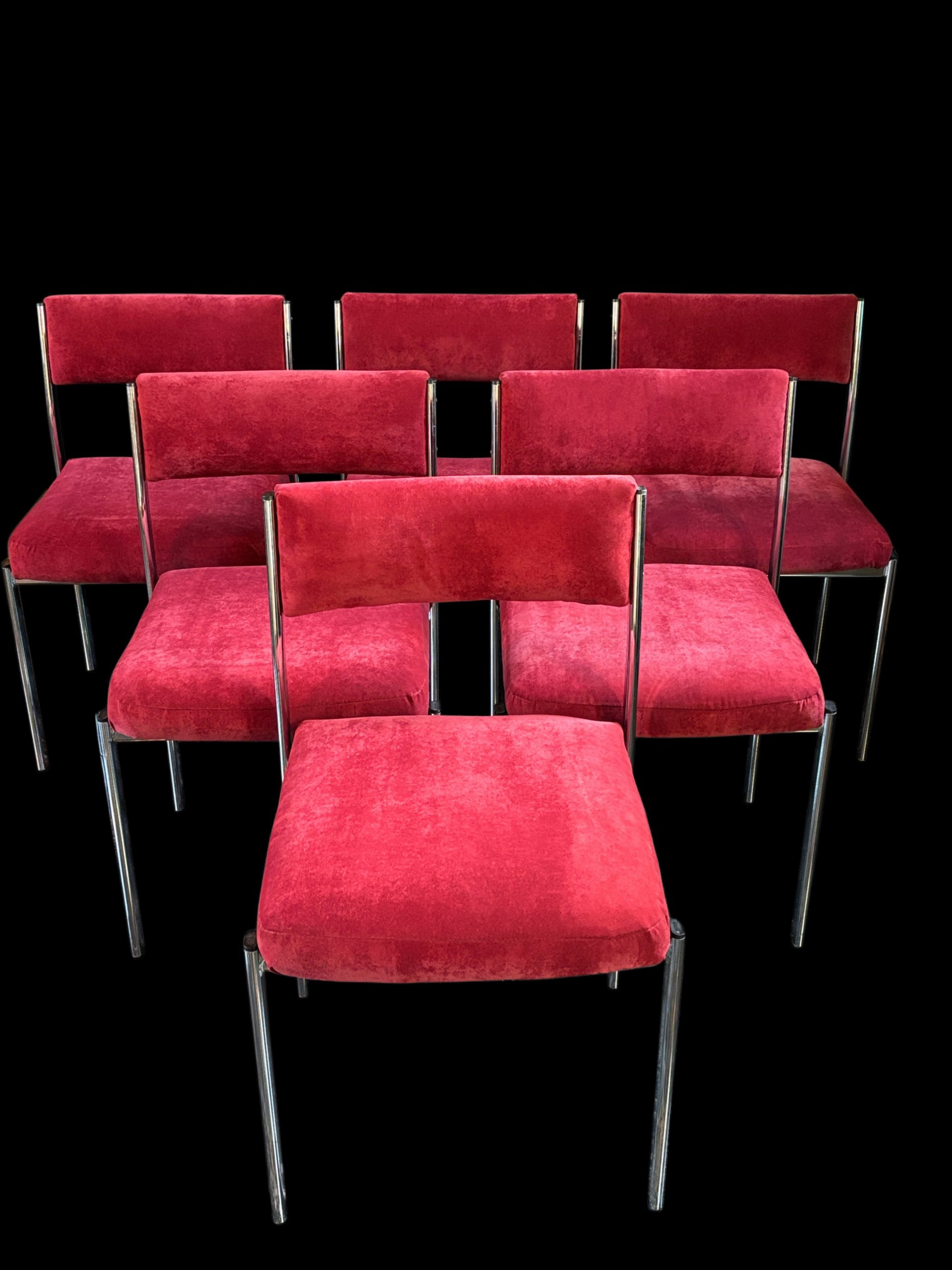
Ruby-red 1970s dining chairs
Ruby-red velvet and chrome tube frames make this restored set a natural bridge between antique furniture and a clean modern dining space.
Pair chairs like these with a contemporary oak or stone table, a restrained pendant light and modern ceramics in deep red, rust or plum. The result feels collected rather than purchased as one matching suite.
Choose antiques that earn their place
Antique furniture should not have to exist purely for display. Chests, bureaus, side tables and cabinets can provide valuable storage while giving a modern room greater depth.
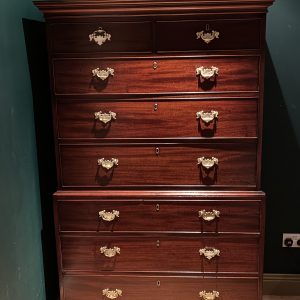
A tall chest is particularly useful where floor space is limited. It offers generous storage through height rather than width, making it well suited to bedrooms, hallways and alcoves.

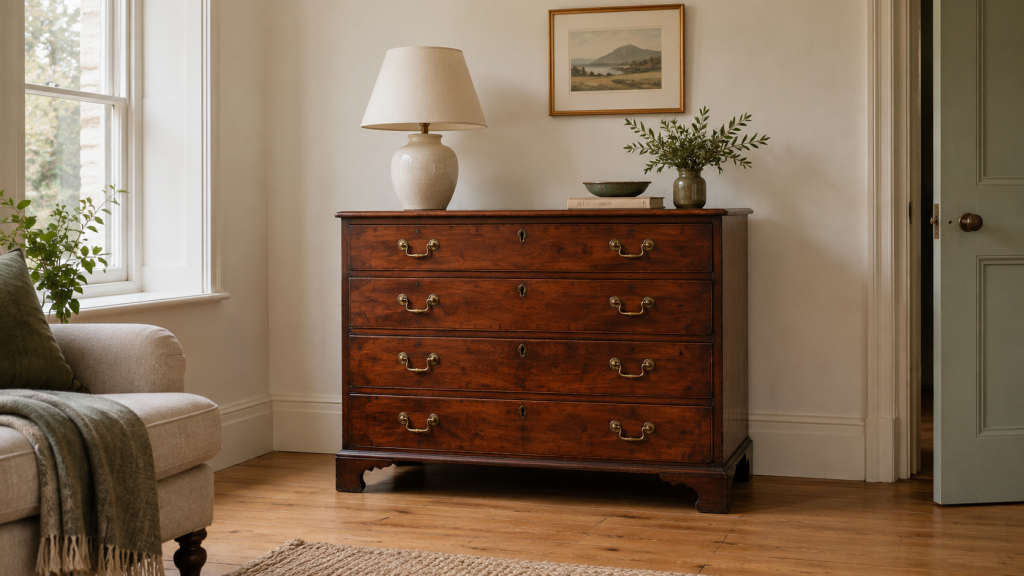
Georgian mahogany tallboy
This restored 18th-century chest offers useful vertical storage. Against a pale wall, its timber brings warmth without demanding a fully traditional room.
Keep the top simply styled with a contemporary lamp, one ceramic object or a small framed work. The antique remains the focus while the room stays calm and current.
Give decorative furniture room to speak
Some antiques are naturally more expressive. A bombe bureau, marquetry cabinet or highly figured sideboard deserves to be treated as the room’s central feature.
Avoid placing several equally detailed pieces beside one another. Give the focal piece breathing space and keep nearby furniture visually lighter. This allows the eye to settle and prevents the room from becoming crowded.
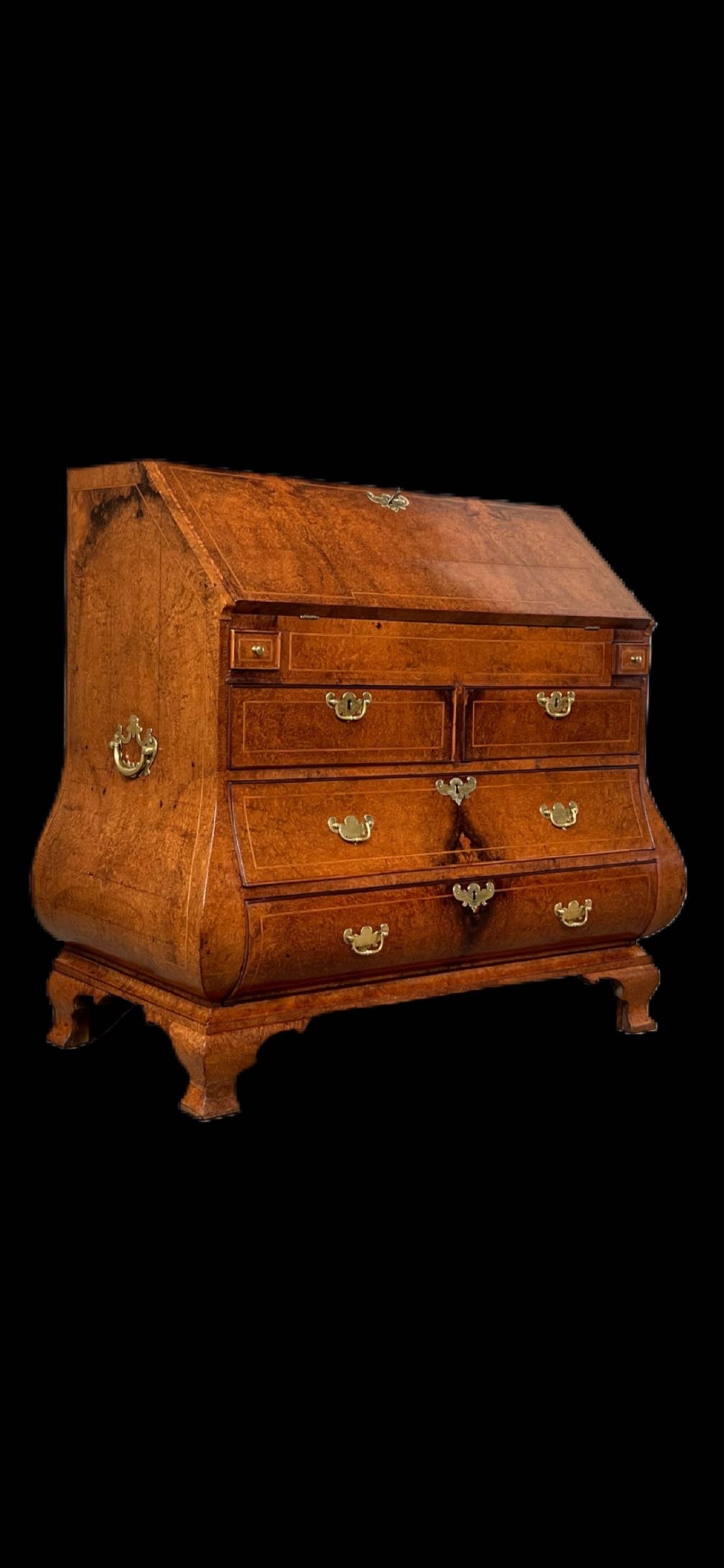
18th-century bombe bureau
Its sculptural form, richly figured veneer and original decorative fittings make this the kind of piece that can transform an otherwise restrained room.
Balance scale and leave breathing space
Proportion matters more than age. A high-backed sofa may need a large artwork or tall lamp to balance its height. A substantial cabinet may overwhelm a narrow room but feel perfectly at home against a long open wall.
Antique furniture often contains more visual information than modern furniture: mouldings, grain, carving, hardware and signs of age. Negative space keeps the room feeling modern and allows the antique to read as a deliberate choice.
Add contemporary art, lighting and textiles
Contemporary art is one of the best companions for antique furniture. A large abstract painting can loosen the formality of a traditional chest or sofa, while modern lighting prevents the room from feeling like a period reconstruction.
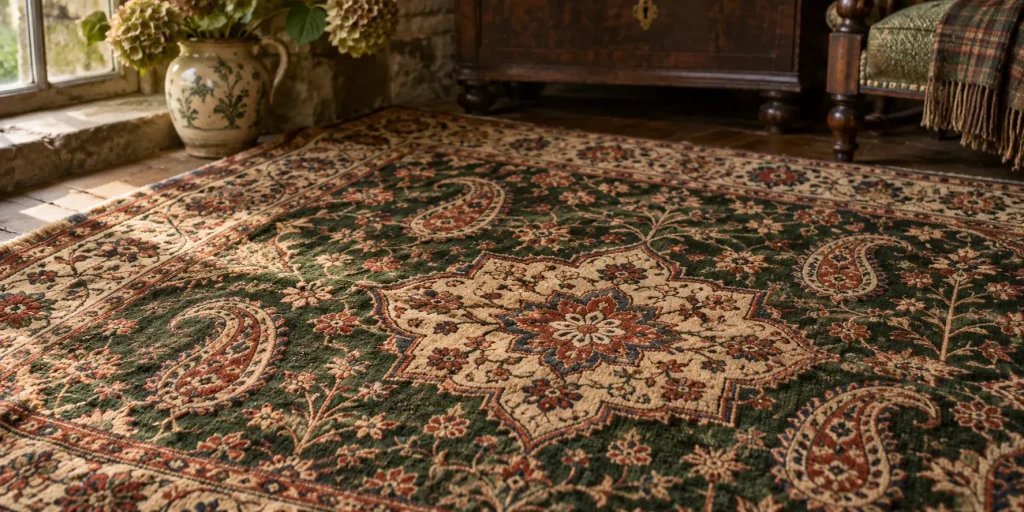
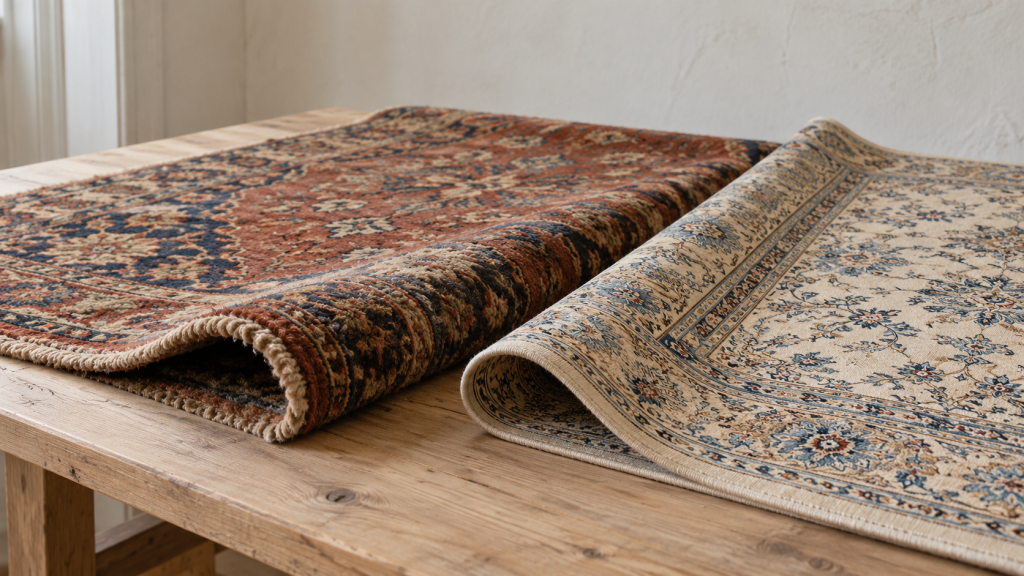
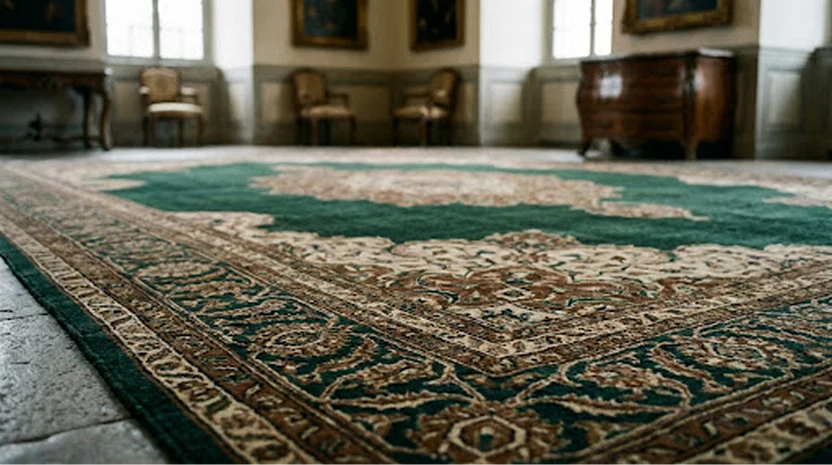
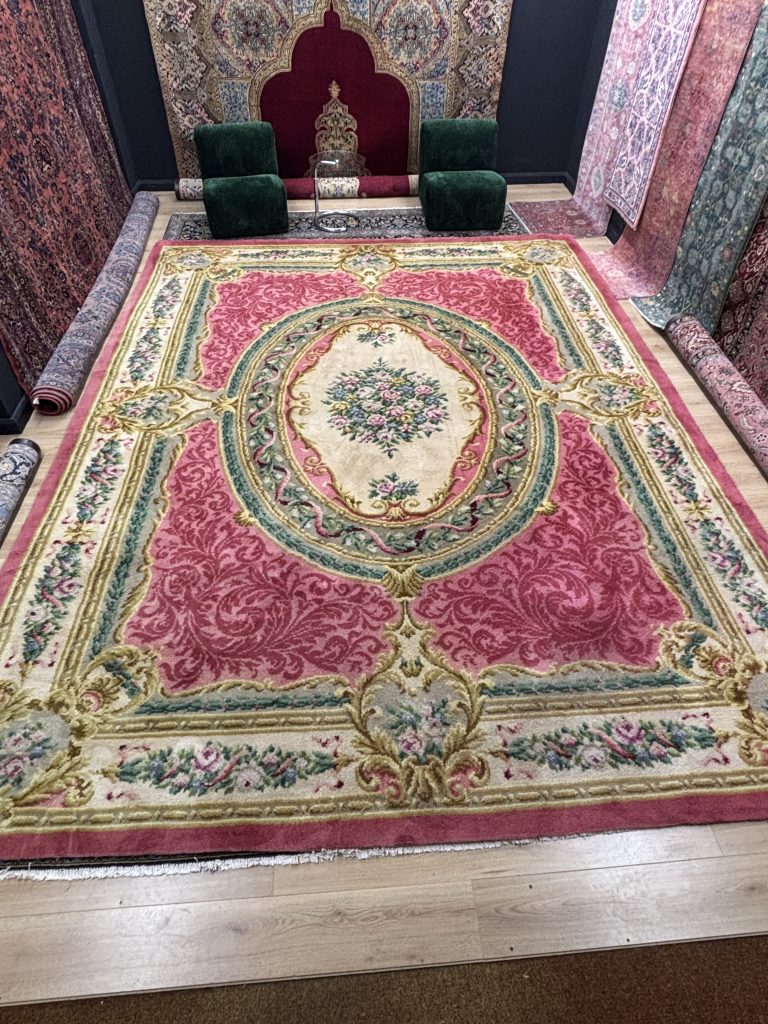
Textiles can unite furniture from different eras. Linen curtains, plain wool upholstery and tactile cushions soften the distinction between polished timber and contemporary surfaces. A hand-knotted rug can introduce colour and pattern while grounding the entire arrangement.
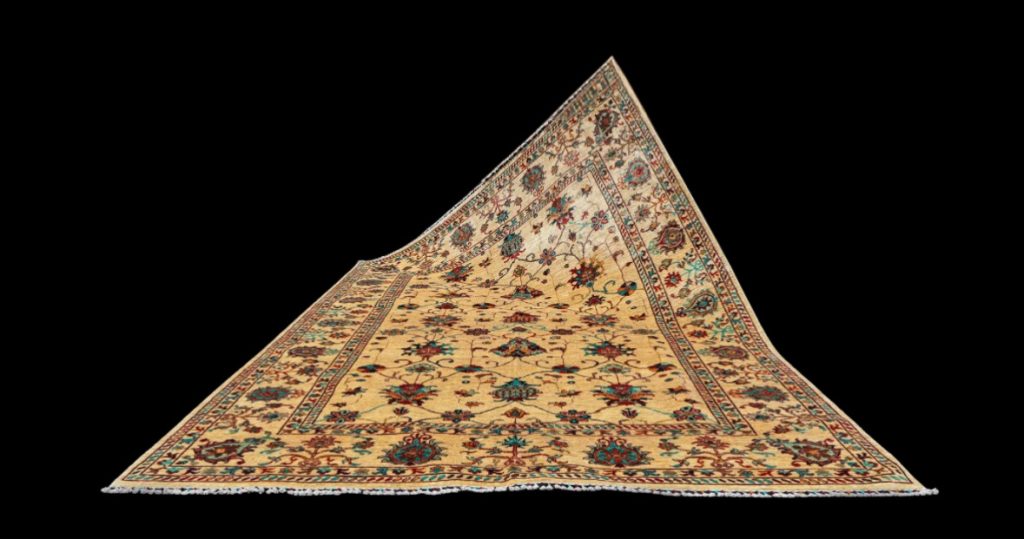
Explore the Mayo Antiques Persian rug collection or read our guide to choosing the right Persian rug for your home before deciding on size and placement.
What to check before buying antique furniture
Before purchasing, ask for clear information about dimensions, condition, previous restoration, original fittings and delivery access. Variation, wear and patina are part of an antique’s story. The important distinction is between attractive age and damage that affects structure or everyday use.
| Check | What to ask | Why it matters |
|---|---|---|
| Dimensions | Height, width, depth and open-door clearance | Confirms the piece fits both the room and delivery route |
| Condition | Repairs, movement, wear and replaced components | Helps distinguish stable patina from structural issues |
| Function | Drawer, lock, hinge and upholstery condition | Ensures the piece suits everyday use |
| Delivery | Access, handling and installation requirements | Protects both the furniture and the property |
For advice about a particular item, contact Mayo Antiques with photographs or measurements of the intended room.
Frequently asked questions
Can you mix different types of wood in one room?
Yes. Different timbers make a room feel layered and natural. Repeat each broad tone at least once and use a rug, paint colour or textile to connect them.
Does antique furniture work in a new-build home?
It can work particularly well. Clean architecture provides a quiet backdrop for natural timber, patina and traditional craftsmanship.
How many antique pieces should a modern room contain?
There is no fixed number. Begin with one anchor piece and add more only when they provide a clear function, meaningful contrast or a piece you genuinely love.
Can antique seating be reupholstered in modern fabric?
Yes. New upholstery can make antique seating more practical and easier to integrate with a contemporary palette, provided the fabric respects the proportions and construction of the piece.
Create a home that feels collected, not coordinated
The best interiors are rarely tied to one period. Start with a piece you genuinely love. Give it room, connect it to the wider interior through colour or form, and allow the surrounding modern furniture to remain simple.
The result will feel considered, comfortable and individual—not like a showroom and not like a museum.
Selected from the collection
Furniture
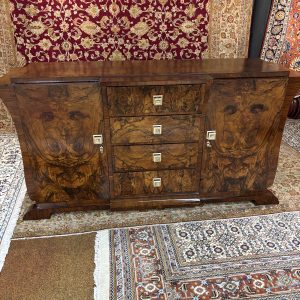
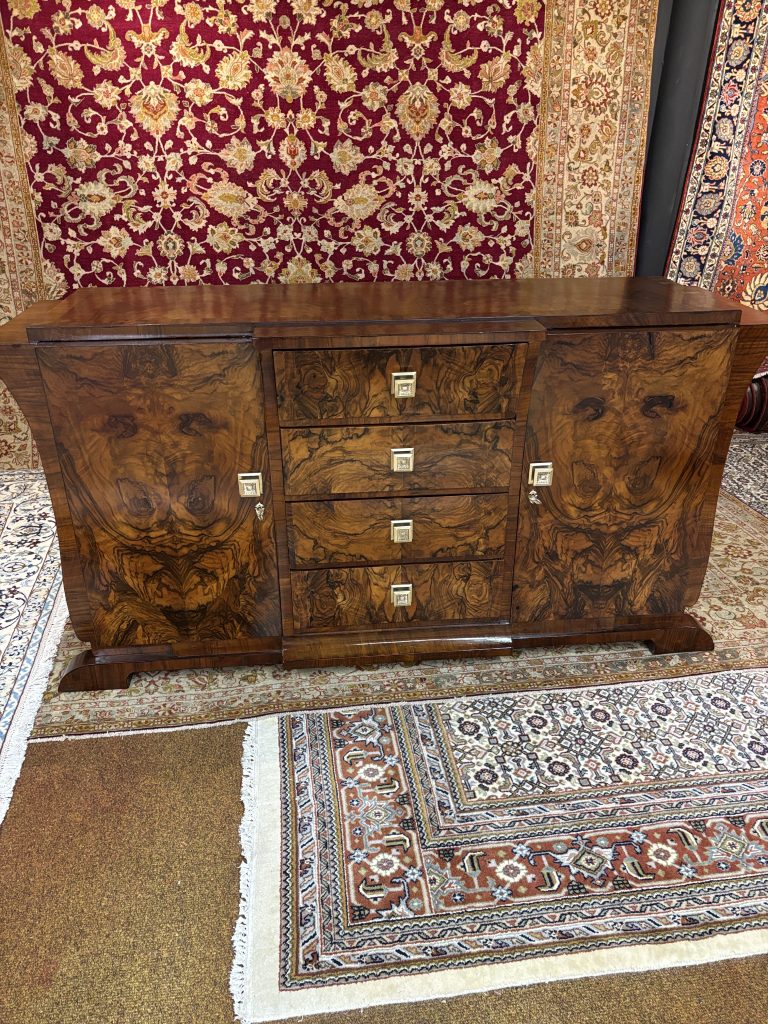
Art Deco Italian Sideboard. Stock #12557A
Why Mayo Antiques
Collected with knowledge. Chosen with confidence.
Discover characterful pieces with clear information and personal guidance from our Castlebar showroom.
One Response