
Persian Rug Motifs and Symbols Explained: Medallions, Boteh and the Tree of Life
Persian rug motifs carry centuries of tradition. Understand the symbolism behind medallions, boteh, Tree of Life and Herati patterns in hand-knotted rugs.
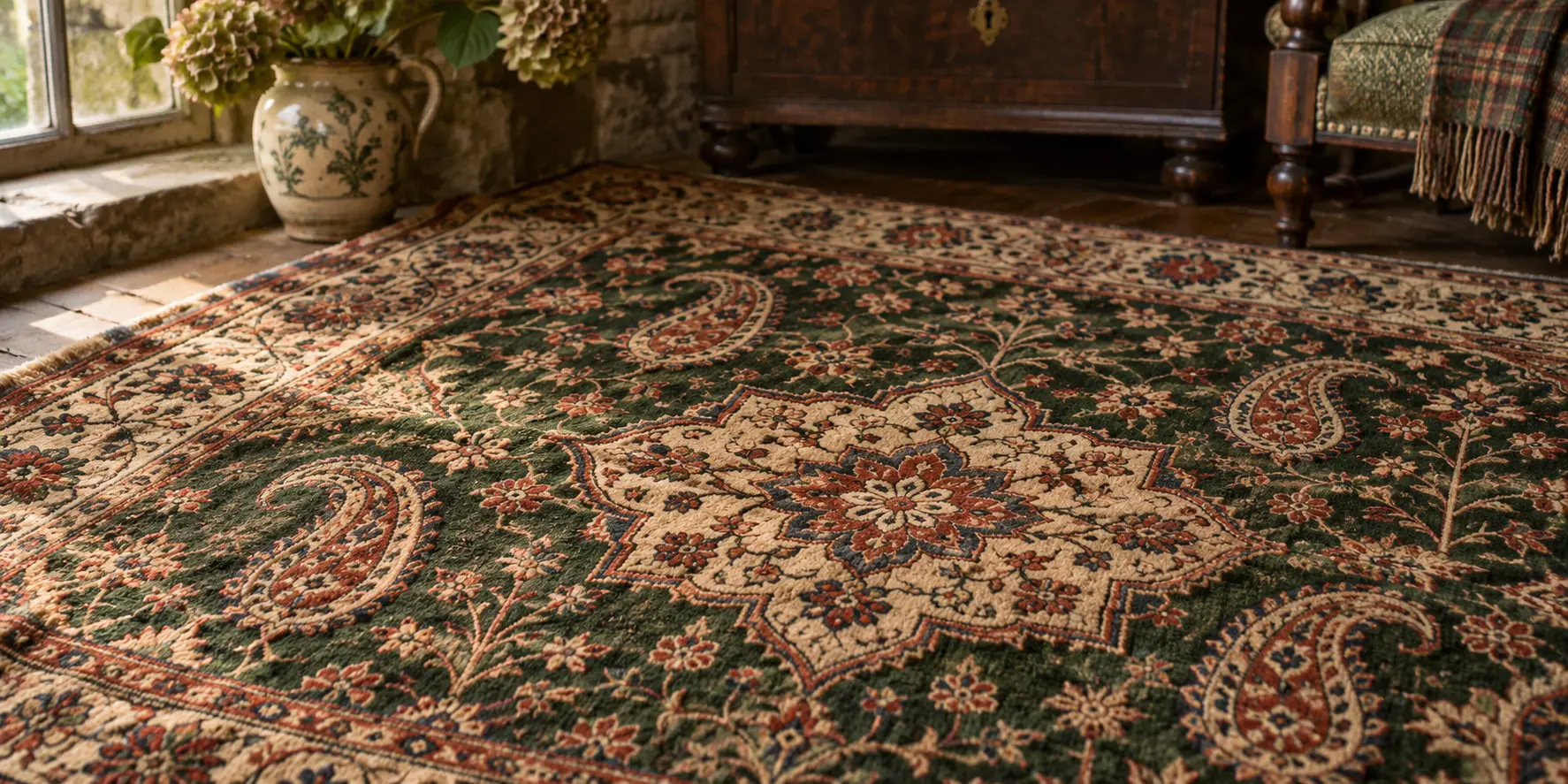
Look closely at a Persian rug and you may notice more than flowers and geometric shapes. A central medallion, a curved leaf or a tree reaching towards the border can reflect design traditions passed between generations of weavers.
Some Persian rug motifs have recognised symbolic associations, while others have changed meaning across regions and centuries. Learning to identify them offers a better understanding of a rug’s design, craftsmanship and cultural background.
What Do Persian Rug Motifs Symbolise?
Persian rug motifs are recurring decorative elements drawn from nature, geometry, architecture and cultural traditions. Their meanings are not always fixed. A flower might carry a symbolic association in one tradition while serving primarily as decoration in another.
Understanding the pattern begins with recognising its shape and how it appears within the overall composition.
1. The Medallion: Balance and Harmony
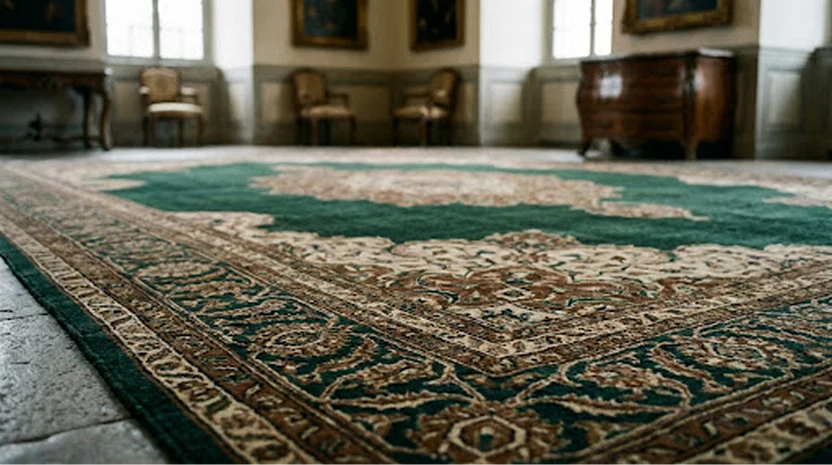
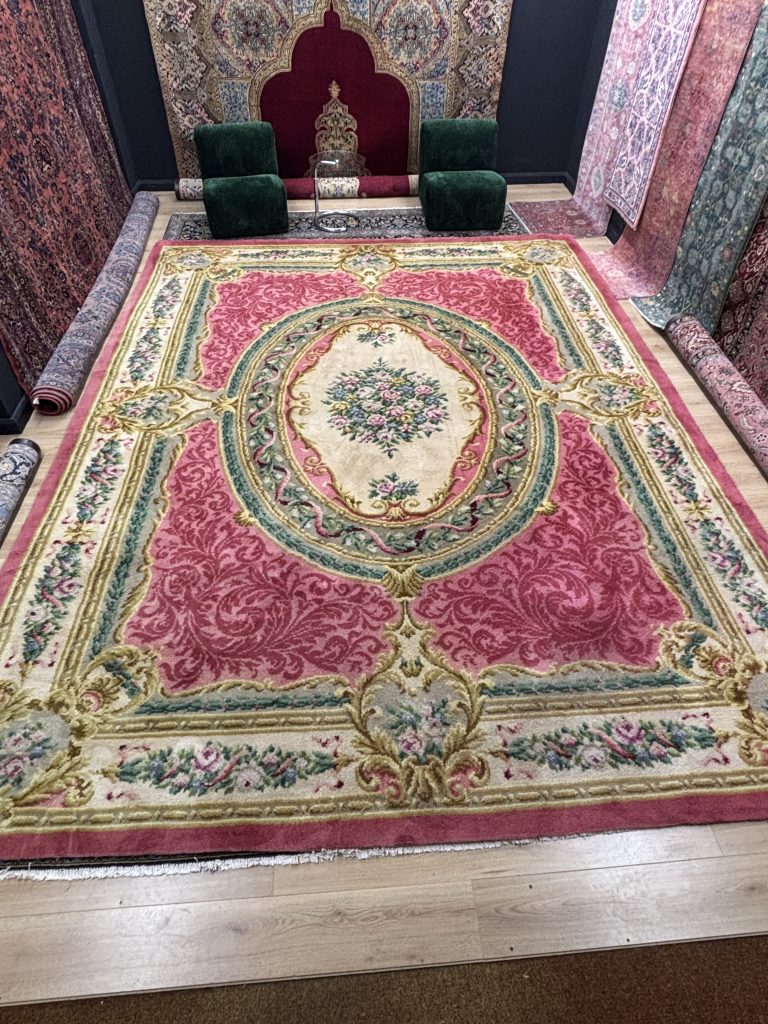
The central medallion is one of the most recognisable features of Persian rug design.
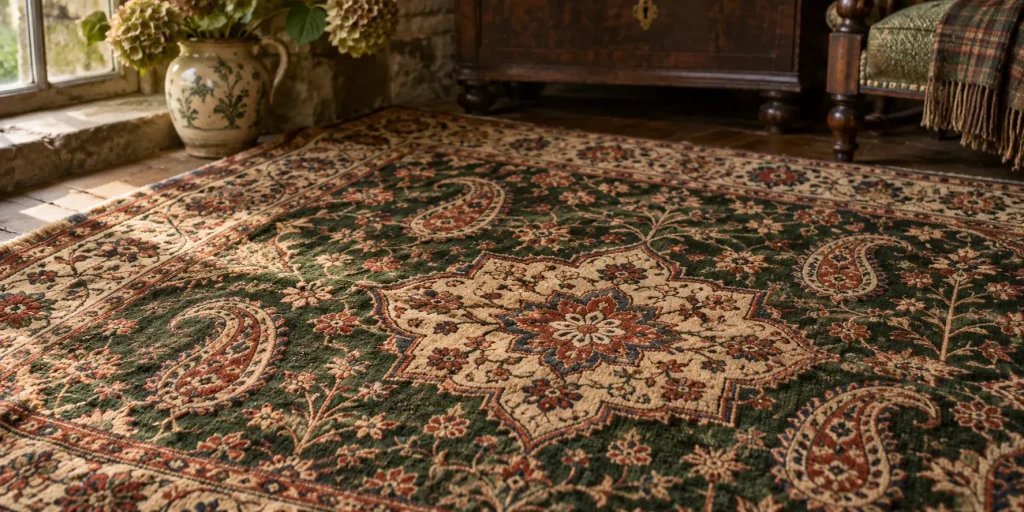
Usually circular, oval, diamond-shaped or star-like, it anchors the composition, often surrounded by intricate flowers and smaller corner motifs.
Medallions are sometimes interpreted as representations of the sun, the heavens or architectural domes. These associations are not universal, but symmetry and balance are central to their visual appeal. The V&A’s account of the Ardabil Carpet offers a documented example of a historic carpet built around an integrated medallion design.
How to recognise it: Look for a large central shape, frequently repeated in smaller sections at the corners.
Medallion designs are common in Tabriz, Kashan and Isfahan weaving traditions. In some village rugs, several angular medallions appear along the length instead of one elaborate centrepiece.
2. Boteh: The Origin of Paisley
The boteh is a curved, teardrop-shaped motif with a pointed tip, often bending to one side.
It is closely associated with the paisley pattern familiar from textiles and clothing.
Its precise origins remain debated. Interpretations include a cypress shoot, a flame, a leaf or a sprouting plant. These have led to associations with life, renewal and continuity.
How to recognise it: Look for repeated comma-shaped forms, sometimes filled with tiny flowers or geometric details.
In Mir and Seraband-style rugs, rows of boteh motifs often cover the field, creating a distinctive repeating pattern.
3. The Tree of Life: Growth and Connection
The Tree of Life is among the most expressive traditional carpet designs.
Usually depicted as a tree rising from the base of the rug, its branches may hold flowers, birds or fruit.
The motif is commonly associated with growth, continuity and the connection between earthly and spiritual life. It also appears in wider artistic and religious traditions.
How to recognise it: Find a prominent upright trunk with branches spreading towards the top of the rug.
Unlike an all-over floral pattern, a Tree of Life design often has a clear top and bottom. This makes orientation worth considering when positioning the rug in a room.
4. Herati: The Repeating Fish Pattern
The Herati pattern, also known as mahi, is typically built around a small flower inside a diamond, surrounded by curved leaves.
The leaves can resemble fish, giving the design its familiar name.
Herati patterns are especially associated with repeating, closely arranged compositions found in Persian weaving.
How to recognise it: Look for a compact diamond-and-flower arrangement repeated across the rug, with curved leaf forms around it.
5. Flowers, Vines and Garden Designs
Floral motifs are prominent in Persian carpets, from delicate roses and palmettes to elaborate winding vines.
Garden designs sometimes divide the surface into compartments containing trees, flowers and other natural elements, recalling the traditional Persian garden.
These patterns may evoke abundance, beauty or the idea of paradise, although individual flowers do not always have one established meaning.
Persian Rug Motifs at a Glance
| Motif | How to recognise it | Common association |
|---|---|---|
| Medallion | Large central geometric or floral shape | Harmony and balance |
| Boteh | Curved teardrop or paisley form | Life and renewal |
| Tree of Life | Upright tree with spreading branches | Growth and continuity |
| Herati | Repeated diamond, flower and curved leaves | Traditional floral geometry |
| Garden | Compartments of flowers, trees and foliage | Nature and paradise |
Together, these Persian rug motifs show how geometry, nature and repetition can shape a complete composition.
Can Persian Rug Patterns Reveal Their Origin?
Patterns can offer clues, but they are not proof of provenance.
Fine curving designs are often associated with city workshops, while bold geometric compositions frequently appear in village and tribal weaving. However, motifs travel between regions, and contemporary rugs may reproduce historical designs.
To understand a rug properly, examine its foundation, knotting, materials, dyes, construction and overall design alongside any available provenance.
When exploring the Persian rug collection at Mayo Antiques, comparing these details can help you appreciate what distinguishes one piece from another.
Frequently Asked Questions
- Do all Persian rug symbols have a meaning?
No. Some motifs have longstanding cultural associations, while others are decorative or have meanings that have changed over time. Avoid treating every pattern as a fixed symbolic message.
- What is the most recognisable Persian rug pattern?
The central medallion is among the easiest to identify. Boteh and repeating Herati designs are also widely recognised.
- Can a rug’s pattern tell you how old it is?
Not reliably. Traditional motifs continue to be reproduced, so age assessment requires examination of construction, materials, condition and provenance.
Why Mayo Antiques
Collected with knowledge. Chosen with confidence.
Discover characterful pieces with clear information and personal guidance from our Castlebar showroom.