
How to Care for and Store Antique and Vintage Jewellery
Care for antique jewellery with gentle cleaning, separate padded storage and protection from moisture, scratches, heat and chemicals.
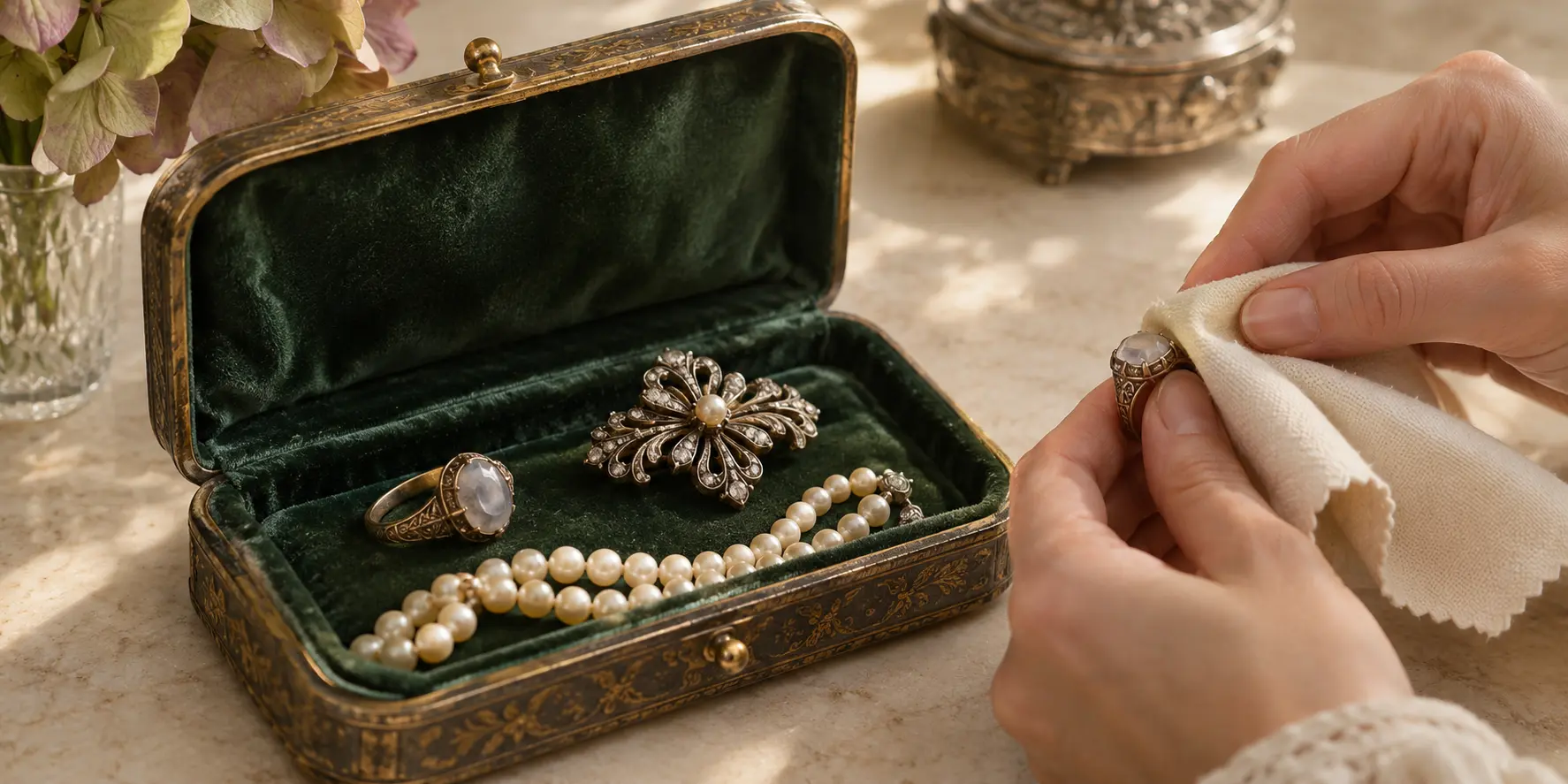
To care for antique jewellery safely, begin with its materials, construction and current condition. Delicate stone settings and intricate metalwork may have survived decades of wear, but that does not mean they can withstand modern cleaning methods.
Older jewellery needs careful handling, particularly when the condition of its gemstones, settings or previous repairs is uncertain. Fortunately, preserving these pieces usually involves a few simple habits rather than frequent cleaning.
How Should You Care for Antique Jewellery?
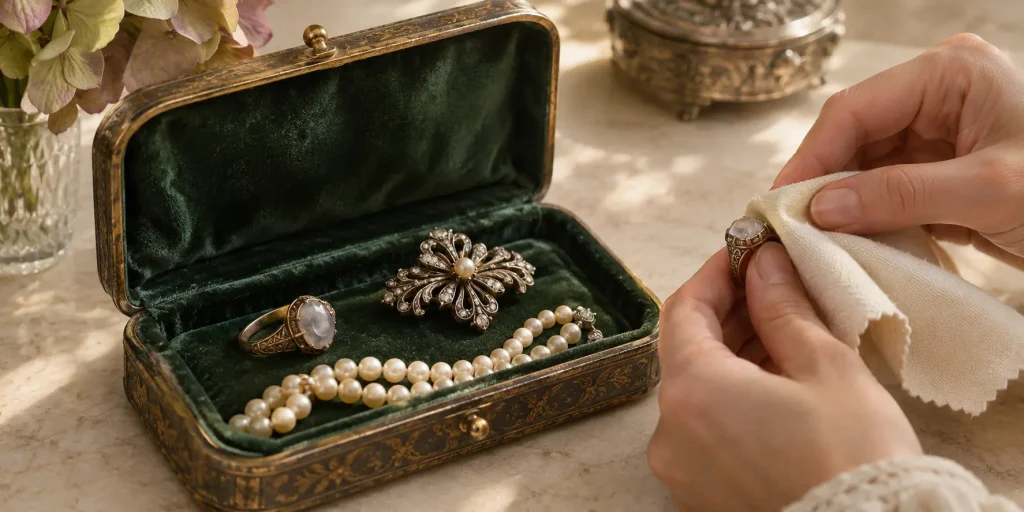
The safest starting point is a dry, soft, lint-free cloth. After wearing a piece, gently wipe away fingerprints, skin oils and surface residue before returning it to storage.
For jewellery that needs more thorough cleaning, the method depends on its materials and construction.
Some structurally sound gold or platinum jewellery with suitable, secure gemstones can tolerate mild soapy water. However, never assume an antique piece is safe to immerse, particularly if it has closed-back settings, glued elements or an unknown repair history.
Avoid household cleaning chemicals, abrasive polishing compounds, toothpaste and ultrasonic cleaners. These can damage delicate surfaces or loosen older settings.
If you cannot identify the gemstone or setting, leave deeper cleaning to a professional.
Which Antique Gemstones Need Special Care?
Different gemstones react differently to moisture, cleaning solutions and physical contact.
| Gemstone or material | Recommended care |
|---|---|
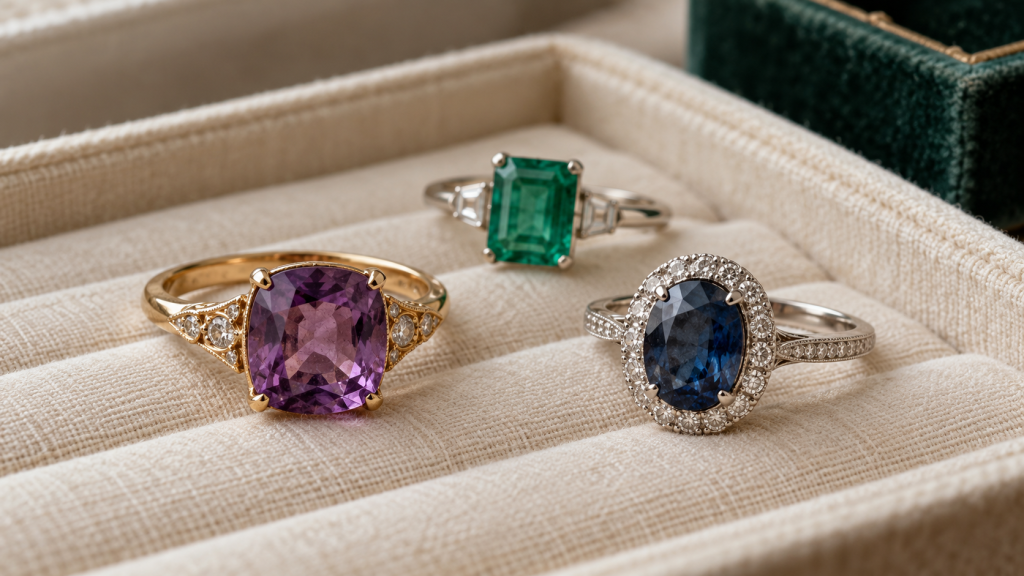
| Diamonds and sapphires | Wipe gently and inspect settings. Professional advice is recommended before wet cleaning older pieces. |
| Emeralds | Avoid ultrasonic cleaning, heat and prolonged soaking, particularly where fracture-filling treatments may be present. |
| Pearls | Wipe with a soft cloth after wearing. Keep away from perfume, detergents and excessive dryness. |
| Opals | Protect from sudden temperature changes, impacts and inappropriate cleaning solutions. |
| Turquoise and coral | Avoid soaking and chemical cleaners, which may affect porous or treated surfaces. |
The setting matters as much as the stone itself. For example, some Georgian jewellery contains foil-backed gemstones designed to enhance their appearance. Moisture entering behind these stones can discolour or damage the backing.
What Is the Best Way to Store Antique Jewellery?
Antique jewellery should be stored in a clean, stable environment, with each piece separated to prevent scratching, tangling and accidental pressure.
A well-organised jewellery box is often sufficient, provided it has soft, non-abrasive compartments.
- Rings: Place individually in padded slots so gemstones cannot rub against neighbouring rings.
- Necklaces: Fasten clasps and store separately to prevent chains from knotting.
- Earrings: Keep pairs together in divided compartments, protecting delicate posts and fastenings.
- Bracelets and brooches: Lay flat where possible, without placing heavier jewellery on top.
Choose a bedroom drawer or cupboard away from direct sunlight, radiators and damp areas. Bathrooms are generally unsuitable because of fluctuating humidity.
For longer-term storage, inspect the condition of the box lining and avoid materials that may tarnish silver or damage sensitive surfaces.
How Can You Prevent Damage When Wearing Vintage Jewellery?
Everyday routines can gradually affect older jewellery, even when no obvious damage occurs.
Put jewellery on after applying perfume, moisturiser and hairspray. Remove rings before gardening, cleaning or lifting heavy objects, and avoid wearing delicate pieces while swimming or showering.
Before fastening a necklace or putting on a ring, look for bent claws, loose stones, worn links or clasps that no longer close securely.
A stone that moves within its setting is a reason to stop wearing the piece, not an invitation to tighten it yourself.
When Should Antique Jewellery Be Professionally Inspected?
Jewellery worn regularly should generally be checked by a qualified jeweller around once a year, or sooner if damage is suspected.
An inspection can identify worn claws, weakened solder joints and loose settings before a gemstone is lost.
For valuable or historically significant pieces, choose a specialist familiar with antique construction. Unnecessary polishing, soldering or replacement of original components can alter details that contribute to the piece’s character.
The GIA jewellery care guidance provides additional material-specific precautions. Specialist advice remains important when you care for antique jewellery with fragile gemstones, closed-back settings or uncertain repairs.
Caring for Jewellery Worth Keeping
Good care for antique jewellery is about preserving original details, not making every old piece appear new. Careful handling, separate storage and appropriate professional attention help protect both its beauty and craftsmanship.
Explore the fine jewellery collection at Mayo Antiques, featuring distinctive gemstones, rings and carefully selected pieces.
Frequently Asked Questions
- Can you use an ultrasonic cleaner on antique jewellery?
It is best avoided unless a specialist has confirmed the entire piece is suitable. Vibrations may affect older settings, treated gemstones and existing fractures.
- Should antique jewellery be stored in its original box?
Yes, if the box is clean, dry and lined with suitable materials. Deteriorating fabric, adhesives or damaged interiors may make a modern archival-quality container safer.
- How often should vintage jewellery be cleaned?
Gently wipe it after wearing. More intensive cleaning should depend on the materials, accumulated dirt and condition rather than a fixed schedule.
Selected from the collection
Jewellery
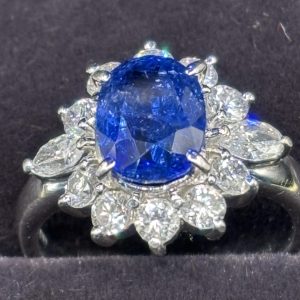
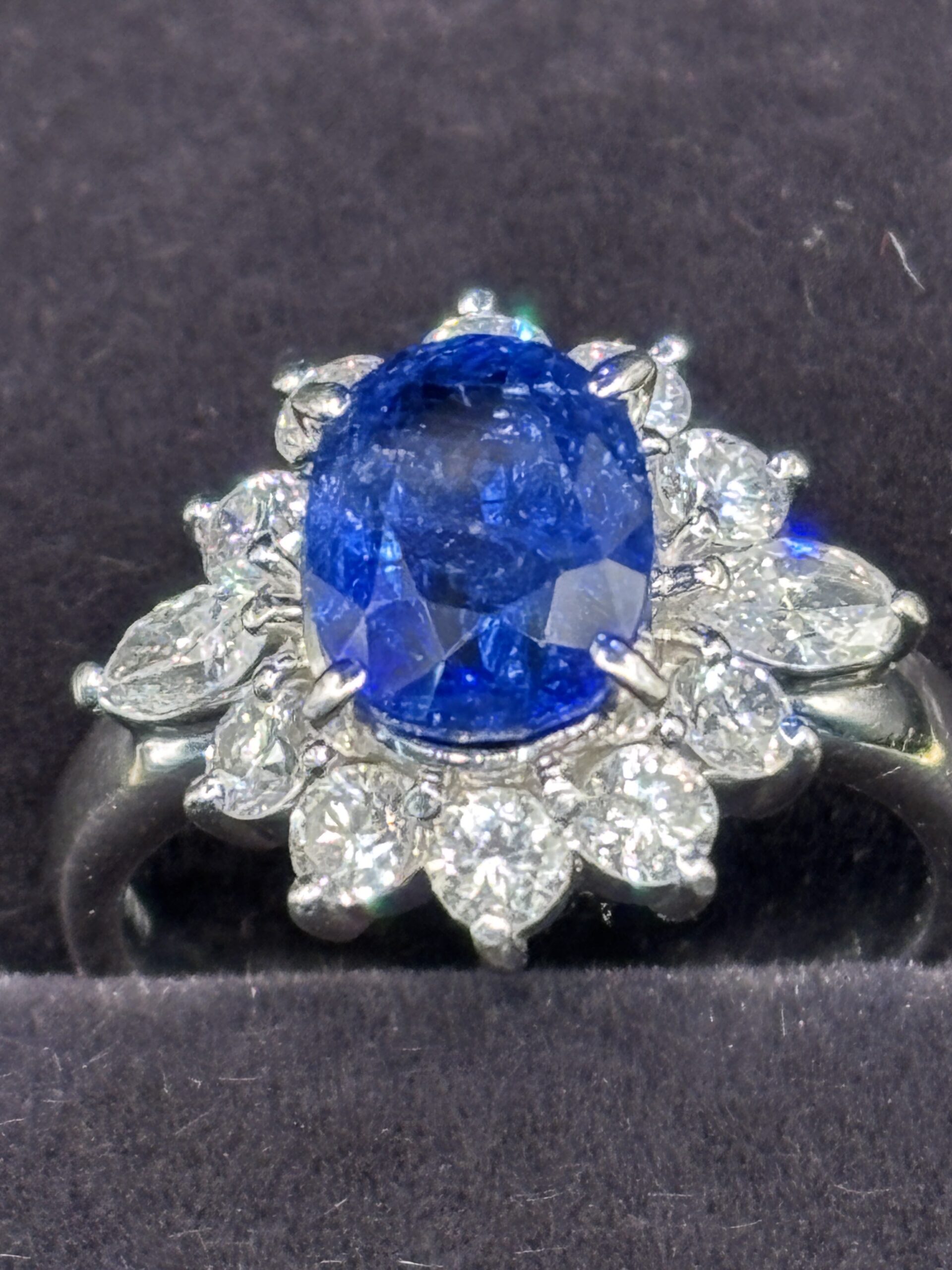
2.61Carat Unheated Burma Sapphire & 1.10carats of Natural Diamonds. Stock#454541
Why Mayo Antiques
Collected with knowledge. Chosen with confidence.
Discover characterful pieces with clear information and personal guidance from our Castlebar showroom.