
How to Choose Vintage Chairs: Dining, Accent and Desk Styles
How to choose vintage chairs: check dimensions, comfort, construction and condition for dining rooms, living spaces and home offices.
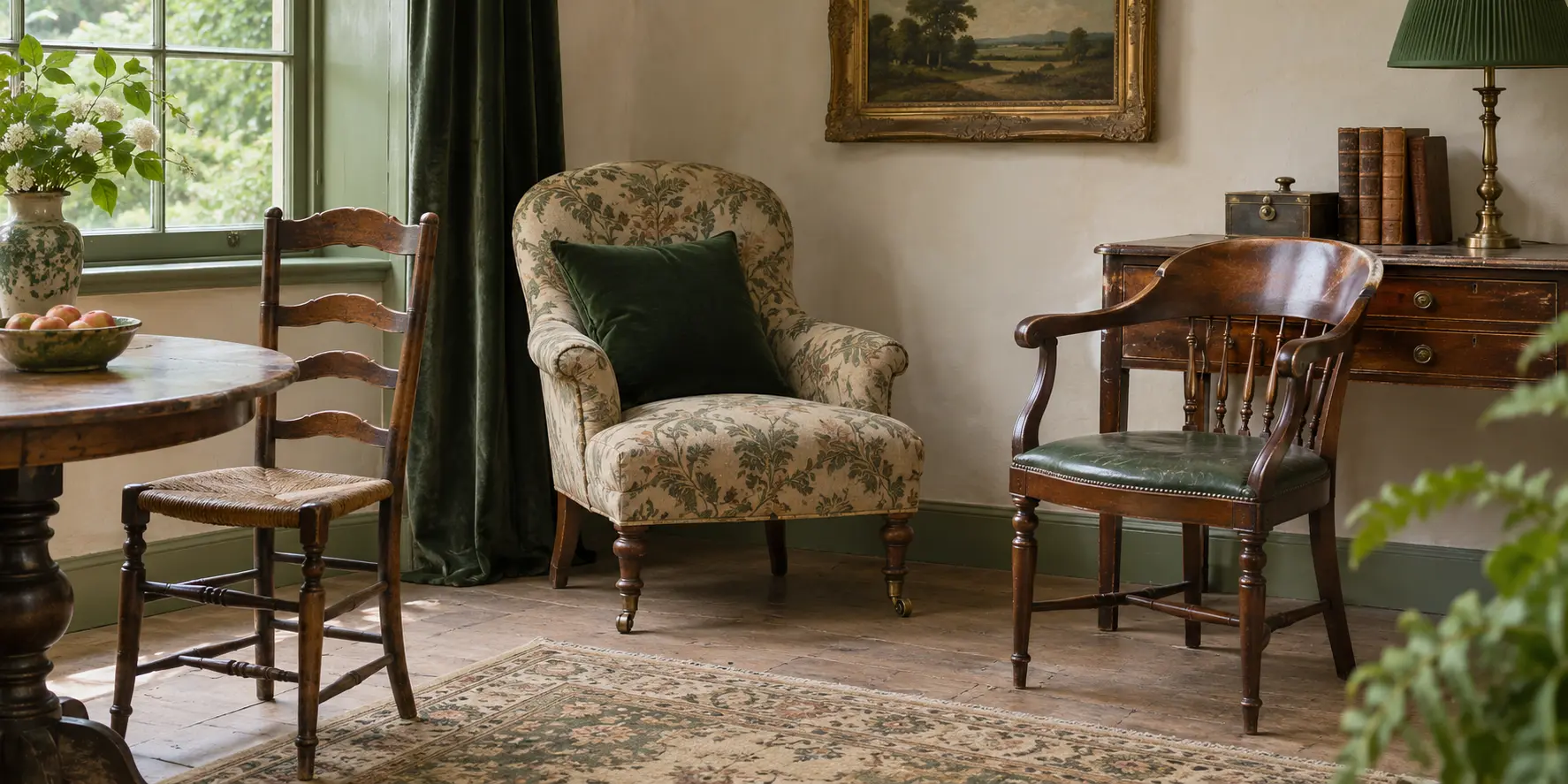
How to choose vintage chairs depends on their intended use, dimensions, comfort, construction and condition. Their proportions, materials and craftsmanship often differ from contemporary furniture, making them interesting additions to modern interiors.
However, appearance is only part of the decision. A chair must also suit its intended purpose, fit the available space and remain comfortable and structurally sound.
How to Choose Vintage Chairs: What Should You Look For?
The most important factors are function, dimensions, construction and condition.
A chair with beautiful carving may be unsuitable for everyday dining if its seat is uncomfortable. Similarly, a striking armchair can overwhelm a small living room if its proportions are too generous.
Before purchasing, consider:
- Purpose: Will the chair be used daily or occasionally?
- Size: Does its height, width and depth suit the space?
- Construction: Are the frame and joints firm?
- Condition: Is any wear cosmetic, or does it affect stability?
- Comfort: Does the seat provide suitable support?
These checks help distinguish a practical furniture purchase from a purely decorative one.
How to Choose Vintage Dining Chairs
Vintage dining chairs must work with the table rather than simply match its appearance.
Check Seat Height and Table Clearance
Most modern dining tables are approximately 74–76 cm high, while dining chair seats are commonly around 43–48 cm. These are reference measurements, not fixed requirements.
As a starting point, allow approximately 25–30 cm between the seat and the tabletop, measured vertically. Check the clearance beneath the table apron separately, particularly when choosing chairs with armrests or thick upholstery.
Allow enough space for chairs to move backwards comfortably, particularly in narrower dining rooms.
Choose a Suitable Dining Chair Style
Different styles influence the overall appearance of a dining area.
- Windsor chairs: Spindle backs and shaped wooden seats suit relaxed, traditional interiors.
- Victorian dining chairs: Often feature decorative carving, shaped backs and upholstered seats.
- Mid-century chairs: Typically have cleaner lines and lighter-looking frames, making them suitable for contemporary spaces.
A matching set creates consistency, but chairs from different periods can also work together when their seat heights and proportions are similar.
How to Choose a Vintage Accent Chair
An accent chair can provide additional seating while introducing a contrasting material, shape or period.
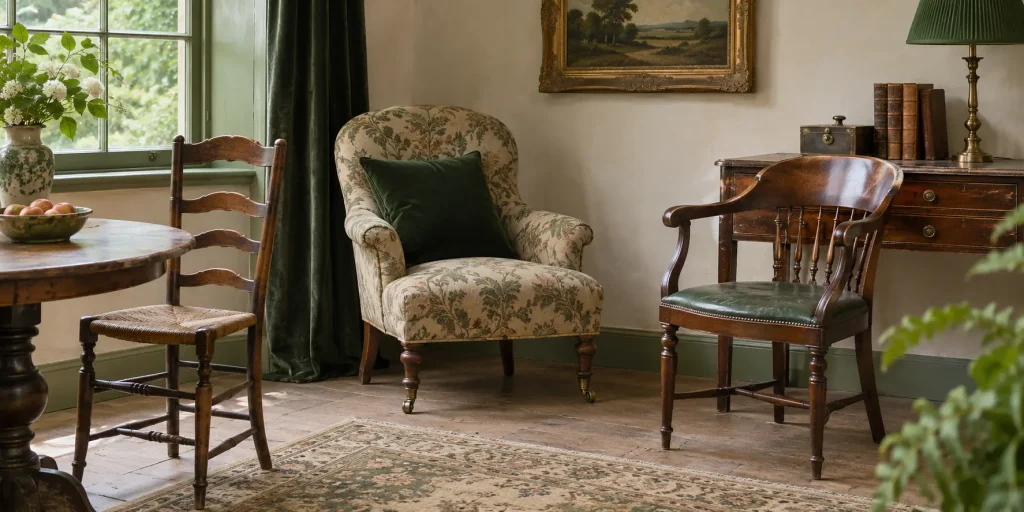
For a smaller sitting room, consider an open wooden frame or a compact chair with slender legs. In a larger space, a generously upholstered armchair can create a comfortable reading corner.
Placement matters as much as style. A chair beside a window, side table or bookcase should leave sufficient room to walk around it.
Look at the existing furniture before choosing upholstery. Patterned fabric can work beautifully against plain walls, while leather, velvet and textured neutral fabrics offer different visual effects.
A vintage accent chair does not need to match the sofa. Repeating one colour, wood tone or design detail can help the pieces feel connected.
How to Choose a Vintage Desk Chair
Vintage desk chairs are appealing for their timber finishes, curved backs and distinctive construction. However, not every traditional office chair suits prolonged computer work.
Check whether the seat height allows your feet to rest comfortably on the floor and your arms to reach the desk without raising your shoulders.
Consider the backrest angle, seat depth and available movement. A fixed wooden chair may suit occasional writing, while long working sessions often require greater adjustability.
If the chair has a swivel mechanism, castors or adjustable components, test their operation before purchasing.
How Can You Check the Quality of a Vintage Chair?
A chair’s condition deserves closer examination than surface polish.
Inspect where the legs meet the seat frame. Loose joints, significant movement and previous repairs may indicate that professional restoration is needed.
Look underneath the seat for signs of damaged timber, altered supports or failing upholstery webbing. Small scratches and an aged finish are not necessarily problems, but structural instability should never be overlooked.
For upholstered chairs, check the seat padding, fabric condition and any unusual odours.
Original finishes and upholstery can contribute to a chair’s historical interest. Replacing them without consideration may affect its character or collectability.
The V&A furniture collection provides useful visual context for historic chair forms and construction. When considering how to choose vintage chairs for everyday use, compare those design cues with practical measurements and condition.
Finding the Right Vintage Chair for Your Home
Knowing how to choose vintage chairs makes it easier to find a piece that is enjoyable to use, not simply attractive to look at.
Measure carefully, examine the construction and consider how frequently the piece will be used. When these practical details are right, the chair’s design and history become even more rewarding.
Browse the Vintage Chairs collection at Mayo Antiques or explore the wider antique furniture collection for distinctive pieces to suit your home.
Selected from the collection
Vintage Chairs
Why Mayo Antiques
Collected with knowledge. Chosen with confidence.
Discover characterful pieces with clear information and personal guidance from our Castlebar showroom.